Proven strategies for finishing, promoting, and getting your tracks into DJ crates and playlists — without a big label or huge following.
I had been sketching electronic music for over 30 years and had never released anything until 2025, when I turned 50 and flipped a switch.
I knew I’d regret it someday if I didn’t show anyone my music.
So I changed my perspective, reflected my ambitions, and developed a workflow that would expose my music to DJs and listeners alike.
It didn’t take long before I was releasing track after track and gaining an audience for my music. Here’s how it works:
I’ll show you my tried-and-tested workflow, which takes you from the notorious four-bar loop to a polished, released track.
This guide is for independent electronic music producers who want to create tracks that DJs will actually play and build a lasting catalog.
To make everything clear, I divided this guide into five sections
Part I: I’ll give you a quick rundown of my journey and the mental obstacles I had to overcome to finally release my music.
Part II: We’ll check out the house and techno scene in 2026 and the role played by labels, streaming platforms, DJs, and AI tools.
Part III: We’ll move on to my tried-and-tested workflow, which will guide you from the initial idea to the finished track.
Part IV: We’ll talk about the typical mistakes I made over the years and which I still see a lot of other producers making today.
Part V: I’ll share more about the tools I use (hardware and software) and provide links to a few of my releases so you can get a feel for my music.
Before we get started, I’d like to draw your attention to my Magasine Essentials playlist.
On the one hand, it might serve as a proof that I know what I’m talking about.
On the other hand, feel free to play the playlist as a soundtrack whilst you read the guide.

This Is Where I Live: Düsseldorf (Germany)
Part I: My 30-Year Journey — From Bedroom Sketches to First Releases
Looking back, it’s almost beyond me why I didn’t manage to release even a single track sooner.
I’ve been playing the guitar since I was 14 and have been into electronic music since I was 19. I’m 50 now, so you can do the math.
In the late 90s, I was so fascinated by drum and bass that I put together my first setup consisting of a synthesiser and a drum machine.
I then got into four-on-the-floor stuff, i.e. house and techno, around 2006.
In 2009, I decided to go freelance for my day job, and then our daughter was born. So, I had to put my musical ambitions on hold for a while.
But honestly, I didn’t really have a lack of time as my biggest challenge back then.
My mindset was…
Perfectionism and other limiting beliefs
I was always really hypercritical with my music.
As soon as a track started to take shape, I’d think, “Not good enough”
That was definitely the case at the beginning: the music just wasn’t good enough to compete with the pro tracks.
I didn’t really know much about electronic sound production or how to mix a track well enough to make it sound good in a club.
But even as my learning curve went up, I couldn’t shake this thought: not good enough. Or, not “cool” enough.
On bad days, I even convinced myself that I simply had no talent for this kind of music. That there’s no way I’ll ever get it to sound professional.
Then there was my…
Indecisiveness: which genre should I stick with?
I loved playing the guitar and improvising as a soloist. On the other hand, I was fascinated by the power and energy of house and techno.
It’s pretty much impossible to bring these two styles together.
So over the years, it was a constant back-and-forth between “handmade” and electronic music.
I was in the middle of one when I realized I’d forgotten the other.
So, I never really committed to focusing on just one genre and putting all my energy into it.

Me With My Kids At The Beach (2019)
Another backdoor …
Procrastination: I can do it later
When you’re young, it’s easier to put things off. After all, you’ve got time to do them later.
So you always find a reason why now isn’t the right time to work hard on your music.
What’s more, it’s always easy to blame your indecision on a lack of inspiration.
I just don’t ‘feel’ like it right now …
And then, as time goes by, one day you think:
I´m too old now
From 2007 to 2009, when I was in my early 30s, I started to raise my ambitions a bit.
I thought to myself: this is probably my last chance to make it in music.
Because, deep down, I was afraid that I was actually already too old for a career in music.
Earning a living as a house and techno producer/DJ is really only for people in their early 20s, isn’t it?
There were two immediate problems with that line of thinking:
Firstly, age doesn’t matter in music (unlike in competitive sport).
Secondly, the idea of making money from music was completely far-fetched from the outset, because I hadn’t released a single track nor had I done many DJ gigs at the time.
Anyway …

Düsseldorf – Bridge Over The Rhine
Everything changed in 2025
In 2024, I finally decided it was now or never.
I’m either going to start releasing my music now, or I’m going to kick myself later on for not doing it.
I hit 50 that same year, and it really gave my ambitions a boost.
So, at the start of 2025, I took a few tracks that had been sitting half-finished on my hard drive for years.
I finally finished producing them, had them professionally mastered, and then released them independently.
Building a catalog
I put out a total of six singles, four EPs, and one full-length album in 2025. That makes a total of 40 tracks.
It’s now 2026, and I’m on track to release 40+ tracks this year under two different stage names.
Basically, now I´m working on a steadily growing collection of music that I own the rights to.
If that isn’t a plot twist, what is? 🙃
Six Lessons I learned
- Instead of second-guessing myself, I’ve learned to just go for it.
- Instead of chasing perfection, I declare tracks finished when I feel they’re good enough to be released.
- Instead of stressing about which genre to focus on, I’m happy to satisfy both of my musical passions: playing guitar and creating house and techno tunes. I just release under two different monikers.
- I don’t think about my age anymore. Sven Väth is over 60, but he’s still killing it on the decks, so I guess age is not an issue.
- Talent isn’t the key to making tracks that sound professional. It’s all about practice, practice, practice. And finishing projects.
- If you put in the work in a systematic way, you’ll see results sooner or later.
Featured Release
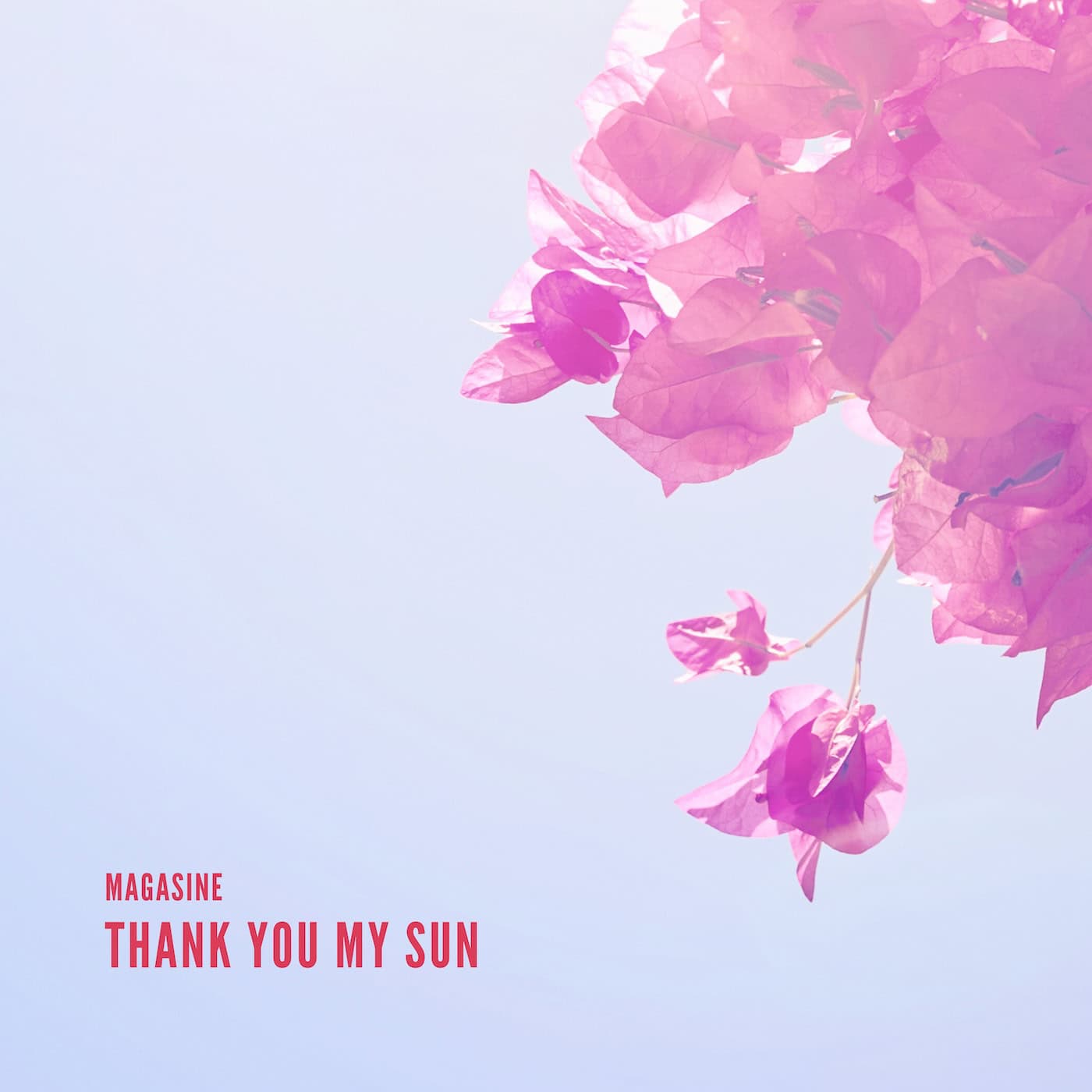
My second Vinyl EP is out now! Thank You My Sun has four upbeat tracks that fit somewhere between house, tech house, and minimal.

Düsseldorf – Rhine View
Part II: The 2026 Reality Check – Labels, DJs, Streaming & AI
The landscape for electronic music artists is constantly changing and evolving.
So let’s talk about what’s working and what’s not these days …
Labels vs. DIY – releasing house and techno tracks 2026
If you’re just starting out and haven’t released any tracks yet, or only a few, forget about other labels.
Start by releasing tracks yourself. We’ll talk about that in Part III of this guide.
If you already have contacts at labels, it can be easier to get things rolling.
As with a lot of other industries, the music scene is all about networking.
So, first make a name for yourself in the scene, then send your tracks to labels.
Remember, this is your decision. Don’t hand it off to someone else right away.
How to Get Your House & Techno Tracks Played by DJs in 2026
If you’re into club music, you’ll want people to listen to your tracks not just at home or at the gym, but also have them played in clubs.
This means that DJs should be able to discover your music and, if they like it, buy it.
Your distributor (see Part III) can help you get your house and techno tracks onto these platforms, where they’re sold to DJs in standard formats like MP3, WAV, or AIFF.
Even so, you should definitely upload your music yourself to platforms like Bandcamp or Subvert.
You don’t even need a distributor for this. You can do it yourself after creating an artist profile there.
The margin for you is also significantly higher on Bandcamp, at over 85% per track sold.
Sending unreleased tracks to DJs is another way to get them played. But that’s a whole different topic that would go beyond the scope of this discussion.
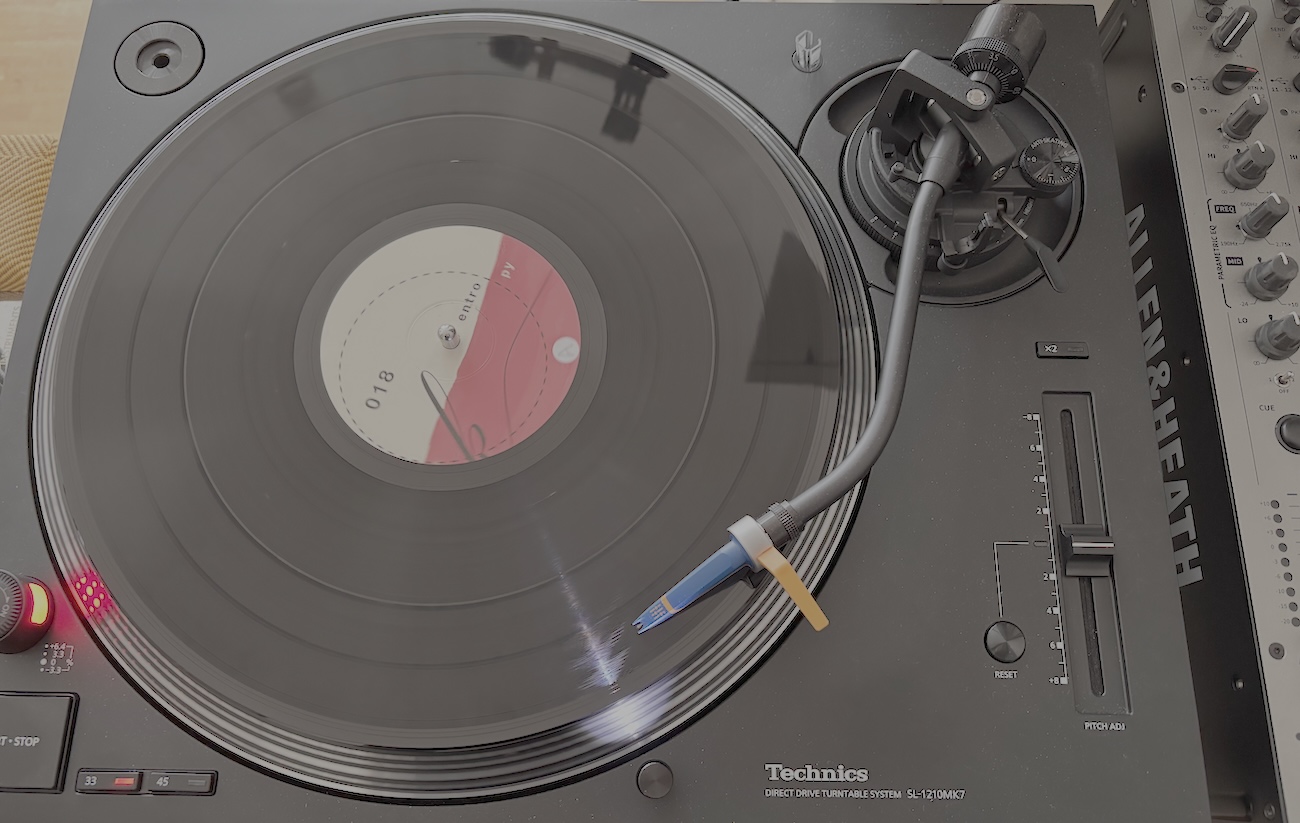
Technics 1210MK7
Streaming & Algorithms
Platforms like Beatport and Bandcamp make it easy to find music, if you know what you are looking for, but they don’t always offer the best discovery experience.
In this regard, the major music streaming services like Spotify, Apple Music, YouTube Music, Deezer, Tidal, etc., have the edge.
For example, one of your tracks could end up in a playlist and gets the attention of house and techno fans.
Streaming has a bad reputation among artists these days, and it’s not just because the pay per stream is pretty low.
Despite all the criticism, there’s one question that ultimately matters most to independent electronic music producers like me:
I can unequivocally answer that question with a yes.
To get your music onto the major streaming platforms, you’ll also need a distributor (see Part III).
SoundCloud is an exception to this rule.
This streaming platform is particularly worth considering for house and techno producers and DJs.
This guide is all about getting your music out there and getting people to listen to it. Just take it one step at a time 😉
AI tools that I use and don´t use
When it comes to AI in music, I’ve got a pretty clear opinion:
Or to put it another way:
AI tools in music are designed to solve problems that real artists – that is, people who know their craft – don’t even have.
Obviously, this is a matter of personal opinion. You’re welcome to see it differently.
Do your mixdowns still sound a bit amateurish?
Then don’t just run your tracks through some random AI mixing tool – learn how to create better mixdowns instead.
Get feedback from people who are more experienced than you, or ask a mastering specialist for advice on how to improve.
If you let AI tools take over your learning curve, it’s on you. I wouldn’t recommend it.
I only sometimes use AI tools like Grok when researching certain topics. Other times, I use it to draw diagrams suited to my needs.
As a non-native English speaker, I use DeepL the most.
Depending on the situation, I might write my texts in German, my native language, or in English. Then I use DeepL for translation and/or to polish the language.
Featured Release
My second Vinyl EP is out now! Thank You My Sun has four upbeat tracks that fit somewhere between house, tech house, and minimal.
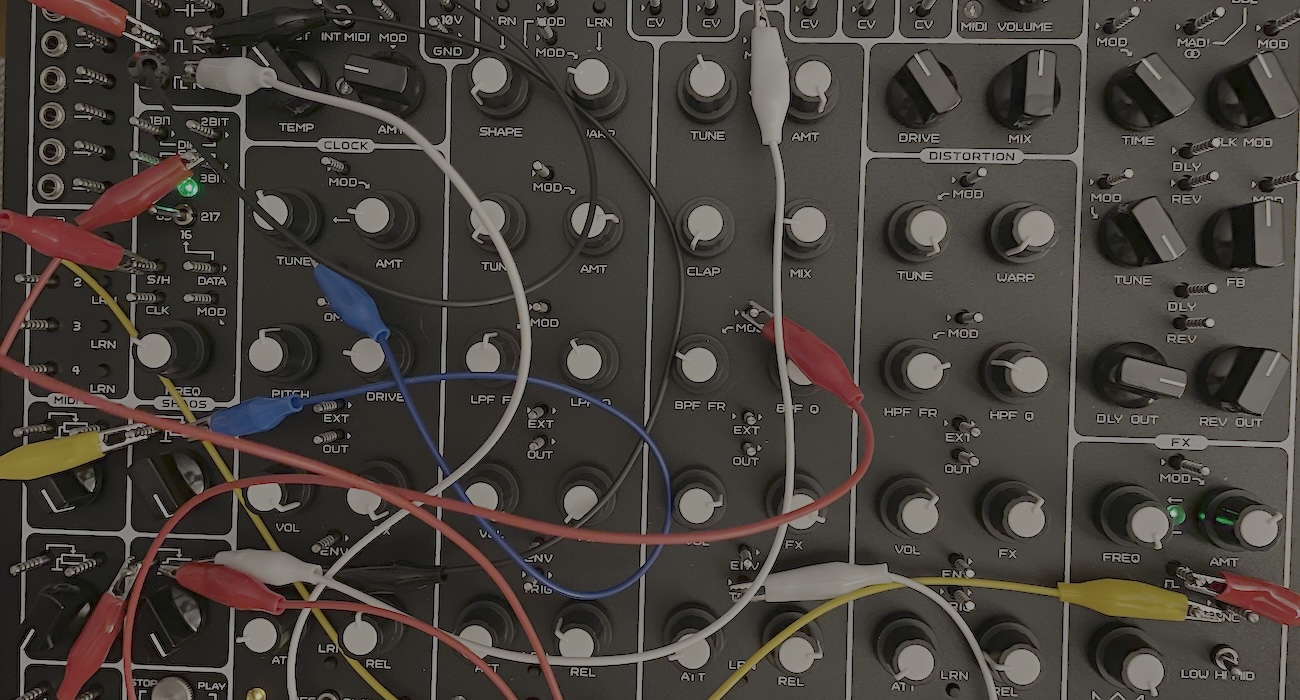
SOMA Pulsar-23
Part III: Step-by-Step Workflow That Gets Your Tracks Played
I tested and tweaked the following steps with every release. Here’s what saved me a lot of time:
Step 1 – Finishing Tracks (turning loops into arrangements)
That’s probably the biggest hurdle for electronic music producers: finishing tracks. Getting to the point where you say:
It’s good enough now. Let’s release it!
I struggled with that for a long time, too.
When it comes to arranging, one thing helps above all else: practice, practice, practice.
The more you turn your loops into complete arrangements, the better they’ll get.
These days, arranging tracks isn’t a problem for me at all. On the contrary, I actually enjoy it.
Forget Session View and use the classic Arrangement View from the very beginning when you’re building your tracks.
Yeah, I know. Session View is what makes Ableton Live special.
But trust me, if you’re used to working in Session View, the road to a decent arrangement is even longer than it already is.
So you’re better off getting used to working directly in Arrangement View while you’re composing and testing out different variations there.
The beauty of house music—and techno in particular—is that there are no hard-and-fast rules when it comes to arranging tracks.
Essentially, your arrangement only needs to do one thing: hold the listener’s attention from start to finish.
In electronic music, this is typically achieved through skillful management of the energy level.
Also known as the tension curve: it’s all about the alternation between tension and release.
Here´s what a typical tension curve of a tech house track might look like:
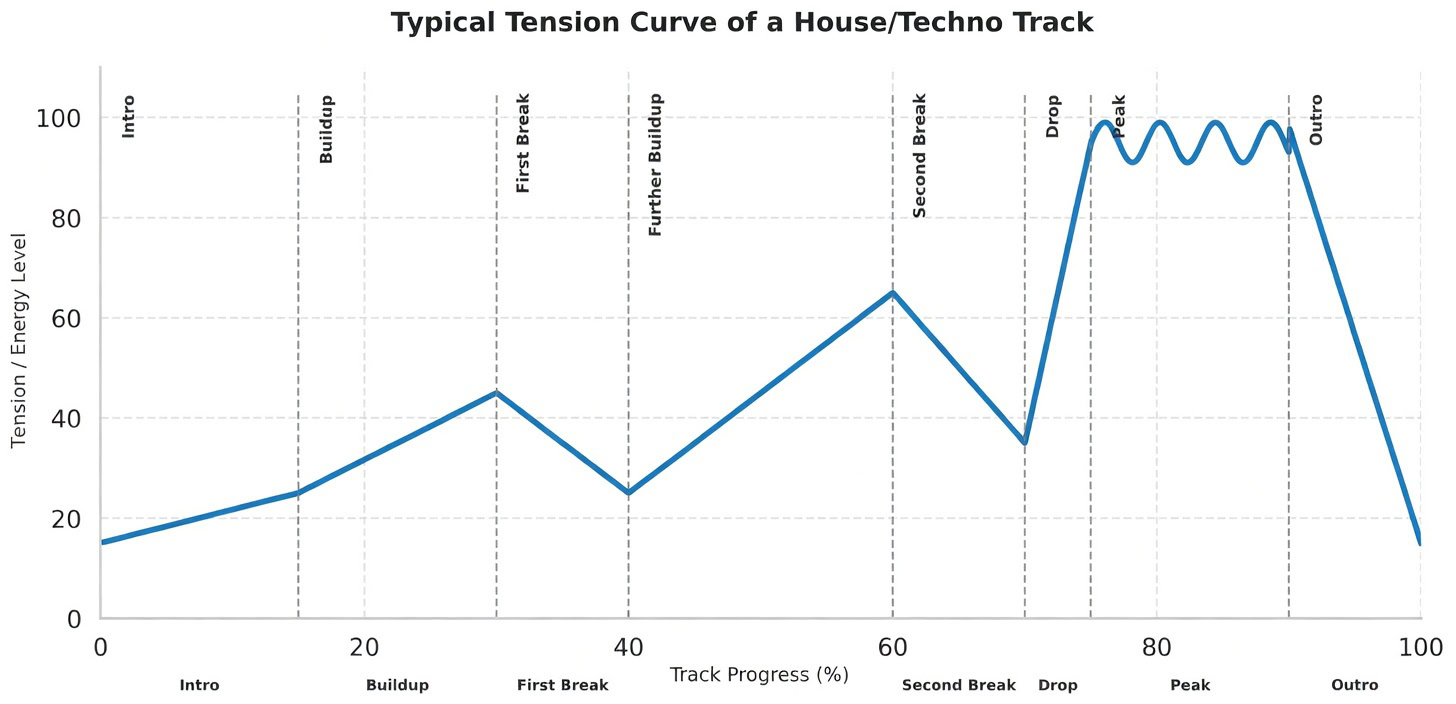
Tension Curve Of A House (Techno) Track
Don’t forget that not every track has to be structured this way.
It doesn’t always need two breaks, a breakdown, a buildup, and a drop.
Alright, we’ve got the arrangement. Let’s tackle the second major hurdle on the way to a finished track:
Step 2 – Mixing house and techno
There’s also a lot to say about mixing. I’ll focus on the key aspects.
Unlike genres such as jazz or rock, the mixing process for electronic music doesn’t begin after recording or composing.
This is because when using conventional instruments, as in jazz, there are few surprises in the mix.
For example, it’s clear what frequency range a double bass occupies. It’s different with house and techno.
A synthesizer can produce all frequencies, from very high to very low.
That´s why we have to start shaping the sound much earlier in the process.
Typically, mixing is a two-step process in house and techno production.
Make sure, right from the composition and recording stages, that every sound in your track is assigned a clear place in the frequency spectrum.
Your most important tools for this task are filters and EQs.
You don’t need any fancy plugins for this; your DAW’s stock EQ is more than sufficient.
Don’t be surprised by how drastically you sometimes have to cut synth sounds with the EQ.
There are no hard and fast rules here either.
If you have to cut -10dB at 150–400Hz to make it sound good, then that’s just how it is.
When it comes to the final mix, use the 3D box model as a guide:
Every sound needs its place …
- in the frequency spectrum (high–low)
- in the stereo image (left–right)
- in the soundstage (front–back)
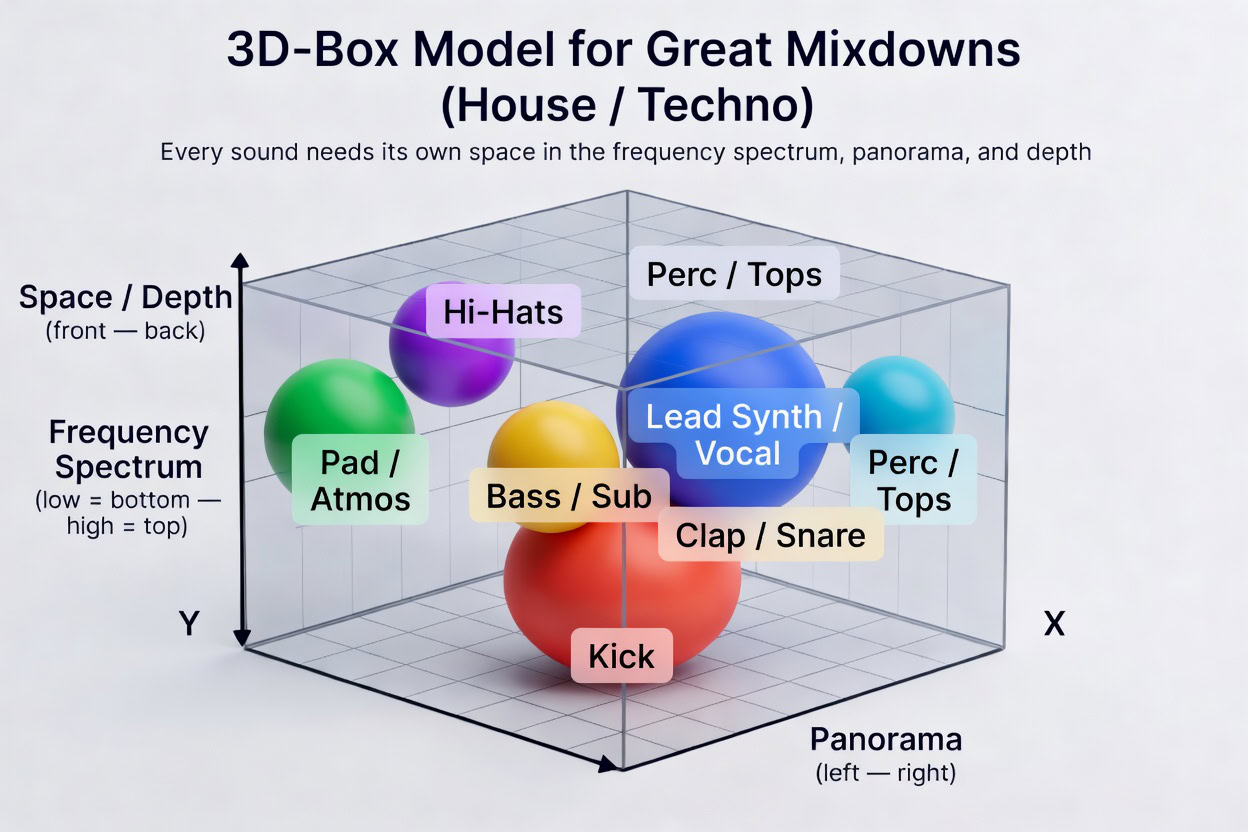
3D Box Model For Great House & Techno Mixdowns
Make sure your mix stays simple and mono-compatible.
Your track won’t sound wider just because every sound is in stereo. Place most of the sounds in the center (mono) and only select sounds on the sides.
The same applies to reverb. Give only one or two sounds more space, and keep the rest relatively dry.
Another popular topic when mixing down house and techno tracks is the low end.
To keep this guide from getting too long, I’ll cover that in a separate article.
Step 3 – Mastering house and techno in 2026
Can you master your own tracks?
Maybe, but I certainly can’t. And I don’t even want to.
- Sending a track off for mastering clearly marks the end of my work — mastering costs money, and once it’s done, the project is finally finished. This prevents me from reopening the track and endlessly fiddling with it.
- The result sounds professional and definitely better than the DIY method.
- A good mastering engineer gives the artist constructive feedback on the mixdown of a track and usually has specific suggestions for improvement. You learn an incredible amount from this.
You also won’t be able to enjoy these benefits if you opt for AI mastering.
It might work in some cases.
But from experience, I know that for a good mastering result, it’s better to make adjustments during the mixdown rather than trying to handle everything at the mastering stage.
Yes, proper mastering does cost some money.
After all, a real person with expensive equipment and a lot of experience has to invest their time and effort into it.
A good mastering engineer doesn’t have to cost a fortune. For around 40–50 EUR or USD per track, you should get professional results.
I’ll discuss how to recognize a good mastering engineer in more detail in a separate article.
Step 4 – Artwork & Metadata
These days, when it comes to artwork for your releases, you have plenty of options for achieving great results on your own.
I create all of my own artwork using Canva.
It’s an online design tool with countless templates for all kinds of projects.
Having a sense of taste and an eye for good design helps.
Browse the artwork of other artists in your genre on your streaming platform of choice for inspiration.
A consistent design style always makes a good impression.
For example, don’t use a landscape photo for one release, a comic-style artwork for the next, and then a retro look for the next one.
Unless, of course, that’s exactly what you want.
Here are a few covers of my releases on Beatport:
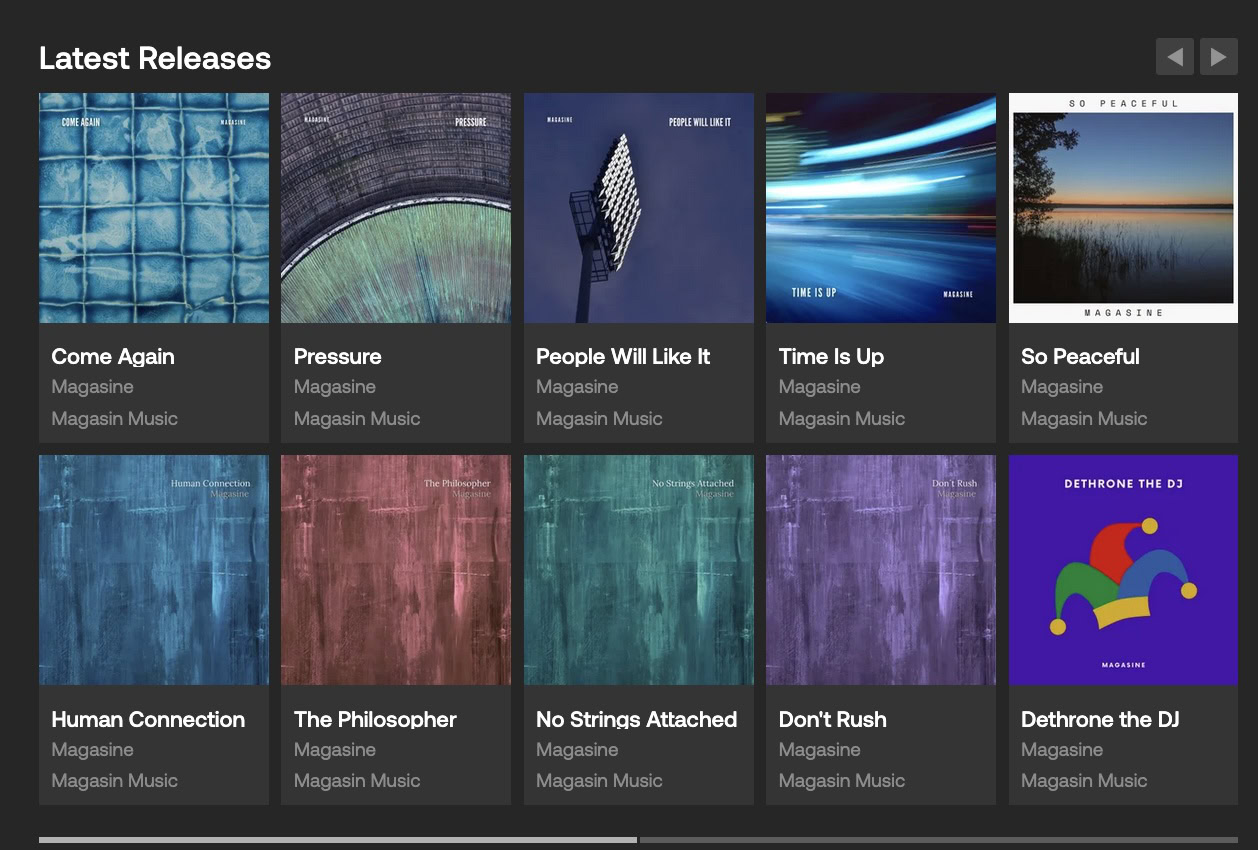
Magasine Releases Cover Artwork
Yeah, one design doesn’t really fit in with the rest. But in this case, I really wanted it that way for this EP 😎
If you don’t trust your own taste 100%, ask people in your circle who have an eye for art to give you some advice.
And if you even know artists who can design a beautiful cover artwork for you (for a small fee), then that’s obviously the best of the best.
A quick note on the metadata for your tracks:
We now have a fully mastered track, beautiful cover art, and a catchy title. With that, we’re ready for…
Step 5 – Distribution for independent electronic music producers in 2026
I won’t be comparing the pros and cons of various distributors here. You can find plenty of such comparisons online.
In many cases, however, reviews are skewed because the YouTubers, bloggers, or influencers in question are affiliate partners of certain distributors.
That could be the reason, for example, why Distrokid is recommended everywhere you look.
After extensive research, I decided to go with the Swiss provider iMusician.
And I haven’t regretted my decision to this day.
What I appreciate about iMusician is the genuine, human support they provide.
There are still real people there who respond to your emails. You can even book video consultations if you need help.
The backend is clear and well-organized:
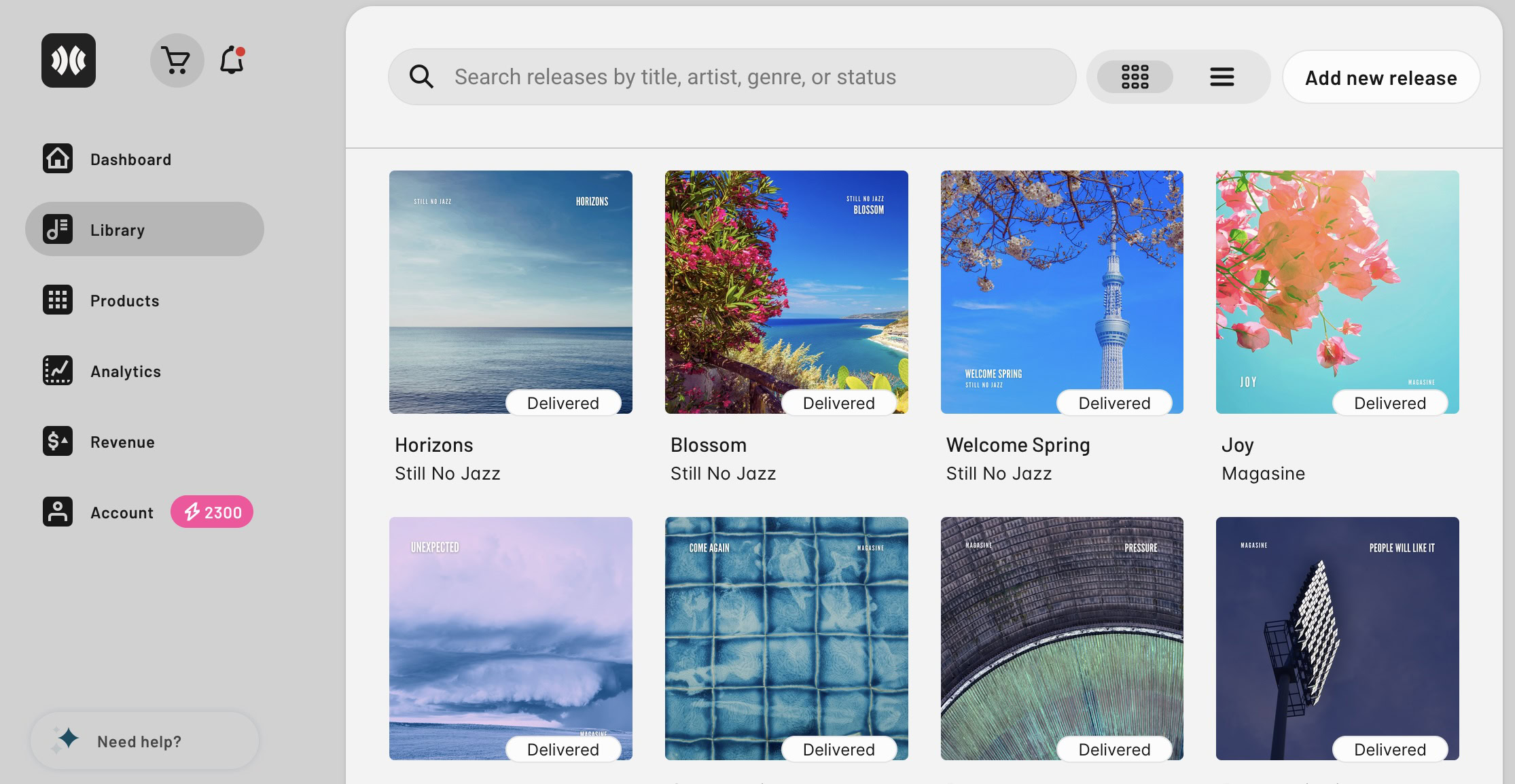
Screenshot iMusician Backend
New releases can be set up quickly and easily.
However, please note that each release requires a lead time of at least 14 days.
While last-minute releases are possible, they incur a significant rush fee.
You might be wondering whether you should release your tracks as singles, EPs, or albums.
At iMusician, all three options are available with the following guidelines:
- Single: 1–3 tracks
- EP: 4–6 tracks
- Album: 7+ tracks
One last point:
So you’ll need a little patience here…
Once you’ve submitted your first track to the distributor, it’s time to make the most of the time leading up to the release:
Step 6 – Pre-Release Promotion
This section will be relatively short.
I don’t think pre-release promotion is as important today as it used to be.
You’re probably all too familiar with these typical social media posts:
“Hey, check out my upcoming release“, “Something big is going to happen” yada yada…
At least when it applies to digital releases.
Just let me know when your thing is released, bro!
However, when it comes to promoting vinyl releases, things look a little different.
Due to the limited number of physically available records, the demand dynamics are different than with purely digital releases.
For example, pre-orders can play a significant role with vinyl.
With digital releases, you can minimize the upfront effort and focus more on the final step of our release plan.
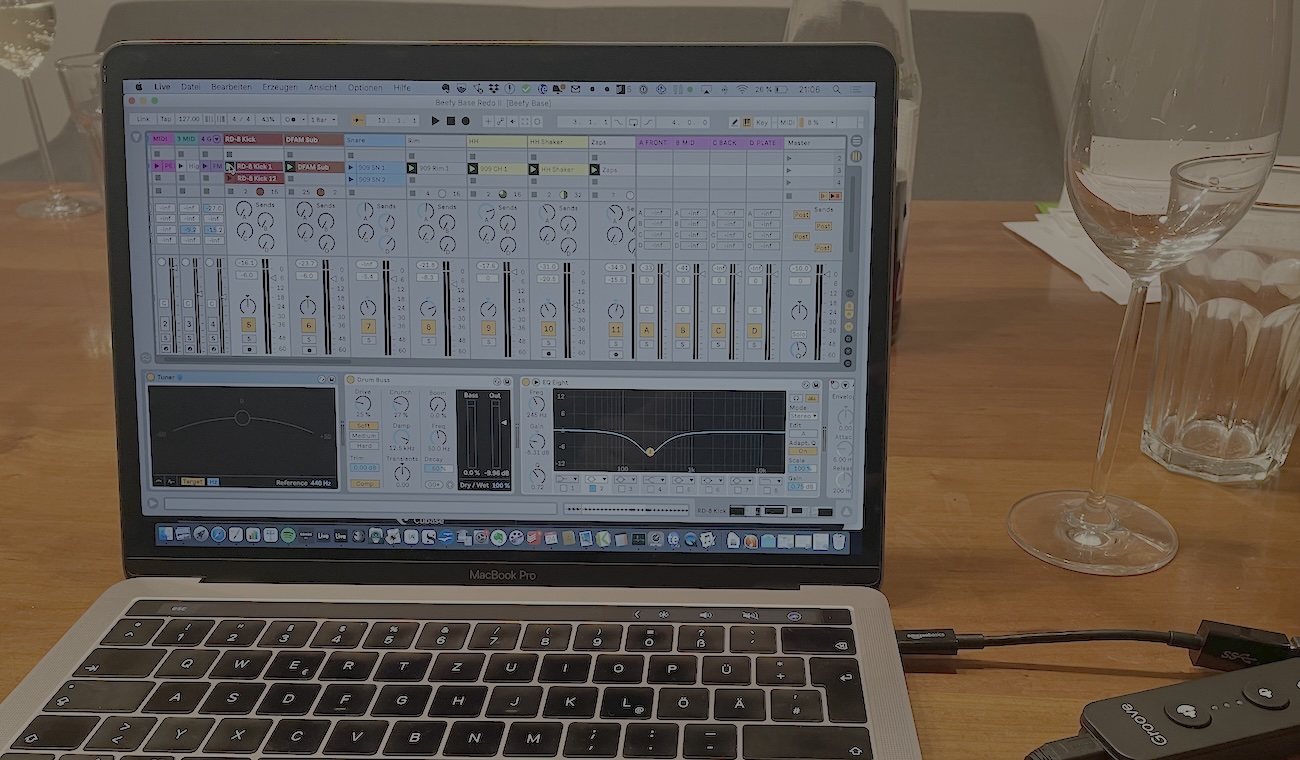
Just Ableton Live & A Glass Of White Wine (Emptied)
Step 7 – Release Day & Post-Release Promotion
This part is crucial.
Every week, around 1 million new tracks are uploaded to streaming platforms.
There are various platforms available to independent producers. The main ones are: Instagram (Facebook), YouTube, and TikTok.
Depending on which platform suits you best, try using organic content there.
If you have a little budget to promote your tracks, I think Meta Ads are the most efficient way to reach an audience.
In any case, I’ve managed to build a decent fan base and following this way.
When it comes to playlists, services like Submithub and Groover can help you get your tracks onto popular playlists in any genre.
Although it’s convenient to listen to a bunch of tracks in a given genre, few people care about the artists behind those neat playlist songs.
That’s why I recommend focusing on Meta Ads.
If people go out of their way to click on an ad they see on Instagram just to listen to your track, there’s much more engagement behind it.
That’s it.
If you’ve stuck with me this far, you now have all the information you need—at least in broad strokes—to successfully release your tracks.
Featured Release
My second Vinyl EP is out now! Thank You My Sun has four upbeat tracks that fit somewhere between house, tech house, and minimal.
Magasine Studio Buddha
Part IV: The 7 Biggest Mistakes I Made (and Still See Everywhere)
Now let’s take a look at a few mistakes you should avoid along the way. I’ve made them all so you don’t have to 😉
01/ Not finishing tracks (I had 100+ sketches)
Like I said, I didn’t run out of ideas in the past. I just couldn´t finish my tracks.
There’s another issue with keeping your tracks at loop level:
If you don’t finish the race, you miss out on the last-mile production lessons.
If you want to finish a marathon but always end up stopping at the 35-kilometer mark on several tries, you’ll never really know what it feels like to push through the last seven kilometers.
So, do yourself a favor and finish at least one track.
One.
And then another one.
And another …
Once you’ve done this a few times, you’ll have overcome the main hurdle that most electronic music producers face.
02/ Overproducing a sloppy arrangement
Arranging a house or techno track is all about managing energy levels.
It took me a while to figure out the proper way to do it.
Instead, this has happened to me more than once:
I came up with an arrangement, but I forgot about the tension and release thing we discussed earlier.
Although the track might sound good, it’s hard to keep listening if there’s no real curve of suspense.
Another shaker, another synth, ramping up the FX levels to keep it more interesting …
So, your track is more complex now, but the original problem still hasn’t been fixed: the arrangement is missing suspension.
To make matters worse, you’ve made it harder to mix your track because more elements need to be balanced.
Here’s what I suggest:
03/ Ignoring room acoustics & monitoring (huge for house/techno)
In the past, I went to great lengths in my old studio to mix tracks properly.
A bunch of bass traps and acoustic panels on the walls and ceiling were supposed to ensure that I could hear all frequencies linearly.
Even so, I had trouble mixing the low end of my tracks cleanly.
The model I still get along with best: the Hifiman Ananda Nano.
No other headphones have a low end as tight as these semi-open headphones.
There may be other headphones that sound smoother, especially in the high frequencies. But when it comes to house and techno, it’s simply essential that the low end is solid.
Another benefit if you’re used to working with headphones:
You can work on your tracks whenever and wherever you want without disturbing anyone.
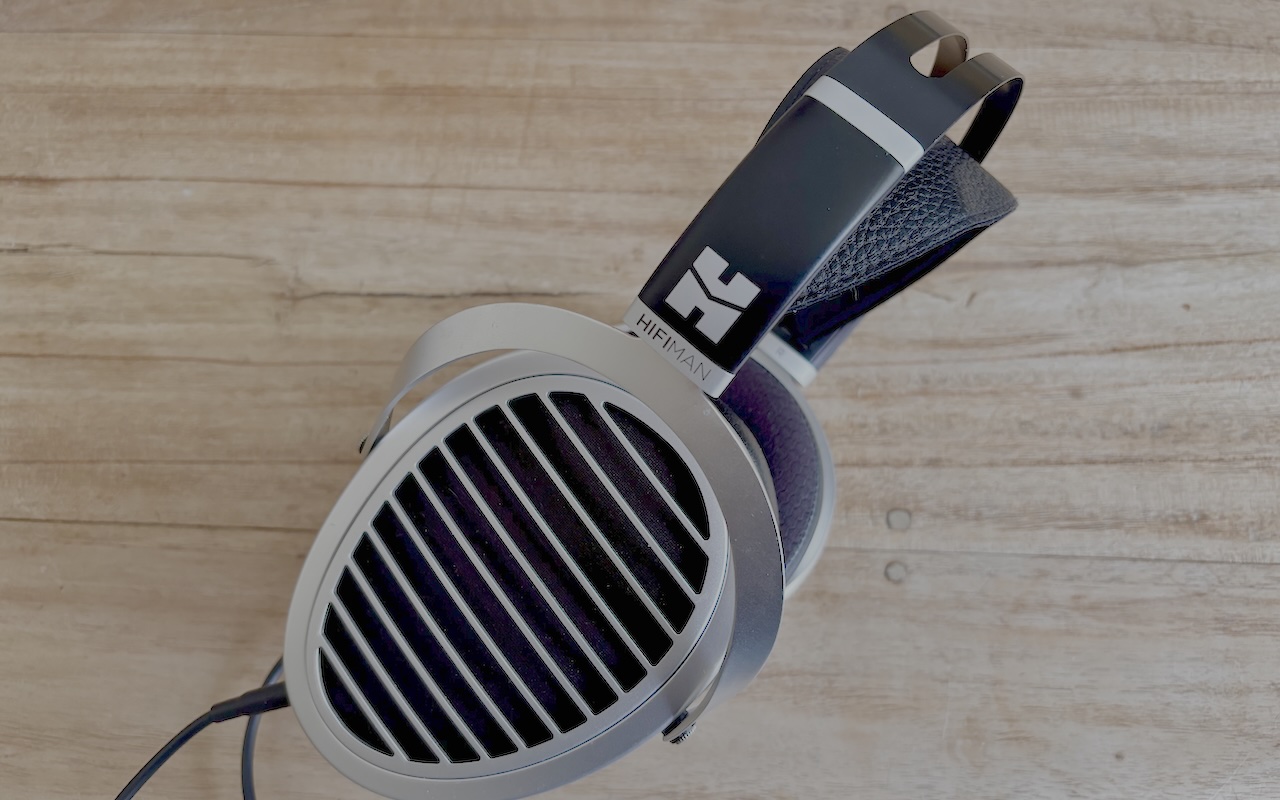
My Headphone Weapon Of Choice: The Hifiman Ananada Nano
04/ Releasing without proper promo plan
I don’t know whether to laugh or cry when I see comments online like, “Artists shouldn’t have to promote their music. When it’s good, people will find it!”
No, they won’t.
Imagine picking up a stranger at a large airport.
“If he wants to be picked up, he’ll find me.”
The truth is:
He will only find you if you stand in front of the correct gate in the arrivals hall at the right time and hold up a sign with the arriving passenger’s name on it.
The same goes for music promotion.
You need to get in front of the right people and hold up your sign.
Hope alone isn’t going to get us very far, if you like it or not.
Whether or not you write a proper “promo plan” for your releases is up to you.
Otherwise, your tracks may be published, but they will remain unheard.
05/ Chasing “originality” instead of club energy
I still haven’t been able to get past that.
My goal is for my music to be, in a way, something special. I want it to sound different from everything else out there.
That’s why I don’t like to work with reference tracks.
If I have to imitate something that already exists, I don’t even feel like getting started.
When I create music from scratch, I want to be as free as possible in my artistic process.
However, there’s a risk of making music that sounds “interesting” but doesn’t work well in a club setting.
Because it’s just too far removed from what makes a house or techno track work on the dance floor.
As I said, I’m not always successful at it.
06/ Focus on tools instead on skills
This is a big one.
GAS, or gear acquisition syndrome, is a real problem.
It’s normal to want to try out different tools and always look for something that can make your music stand out.
Electronic music thrives on its producers’ love of experimentation.
Online music forums are full of people who are racking their brains over various tools, and some even openly admit that they barely get around to making music.
I still haven’t completely gotten my GAS under control, but at least it doesn’t stop me from producing and releasing a ton of music anymore.
When in doubt, keep reminding yourself what all those amazing things in your studio really are: tools.
Made for making music.
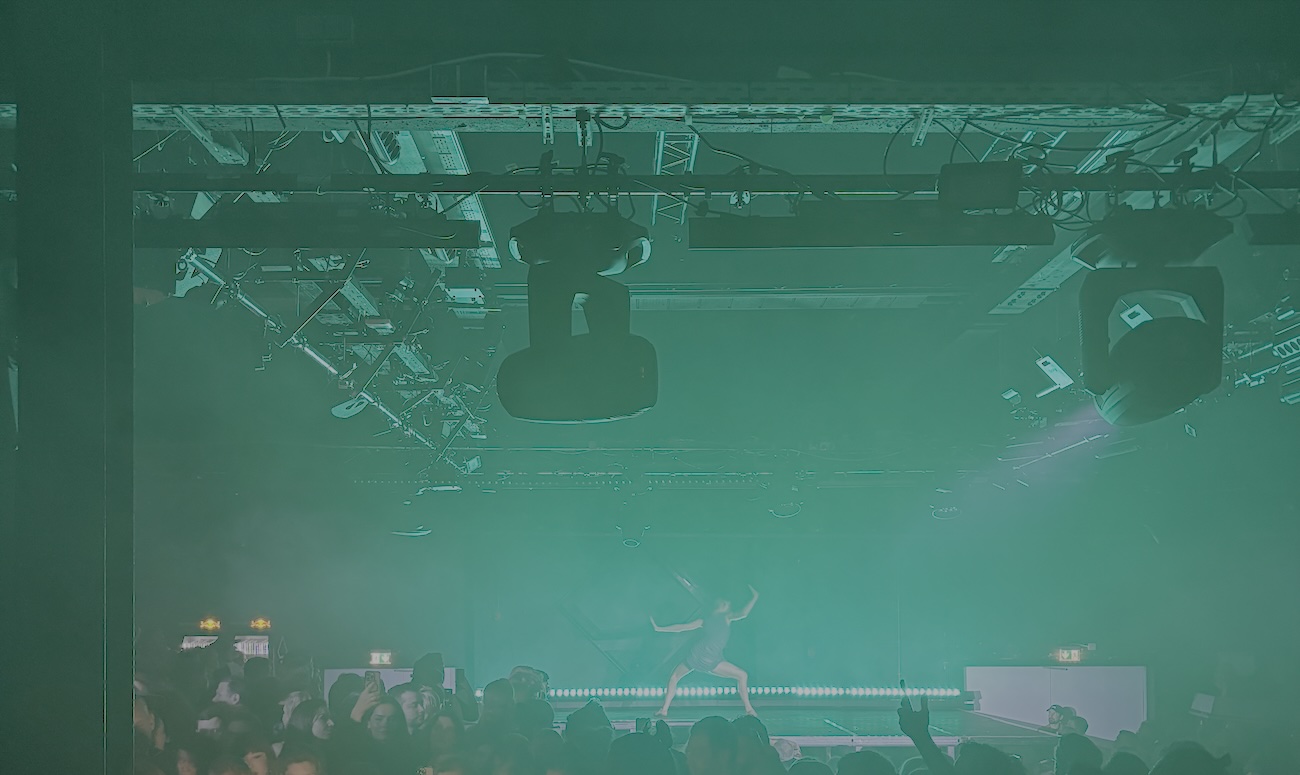
Bootshaus Club (Cologne)
07/ You’re not going to the club
A few final thoughts on clubbing.
It’s one thing to listen to electronic music at home.
You can only experience the full range of sound there, including the deep bass.
Good club music, as the name suggests, is made for the club.
That’s where it really shines.
Of course, it depends on your lifestyle, but you have to be able to afford a night out at the club.
By that, I mean less the financial investment and more the lack of sleep that comes with it.
If you’re currently raising young kids, you know what I’m talking about.
There’s hardly anything more inspiring and motivating than spending a few hours in a club listening to good electronic music.
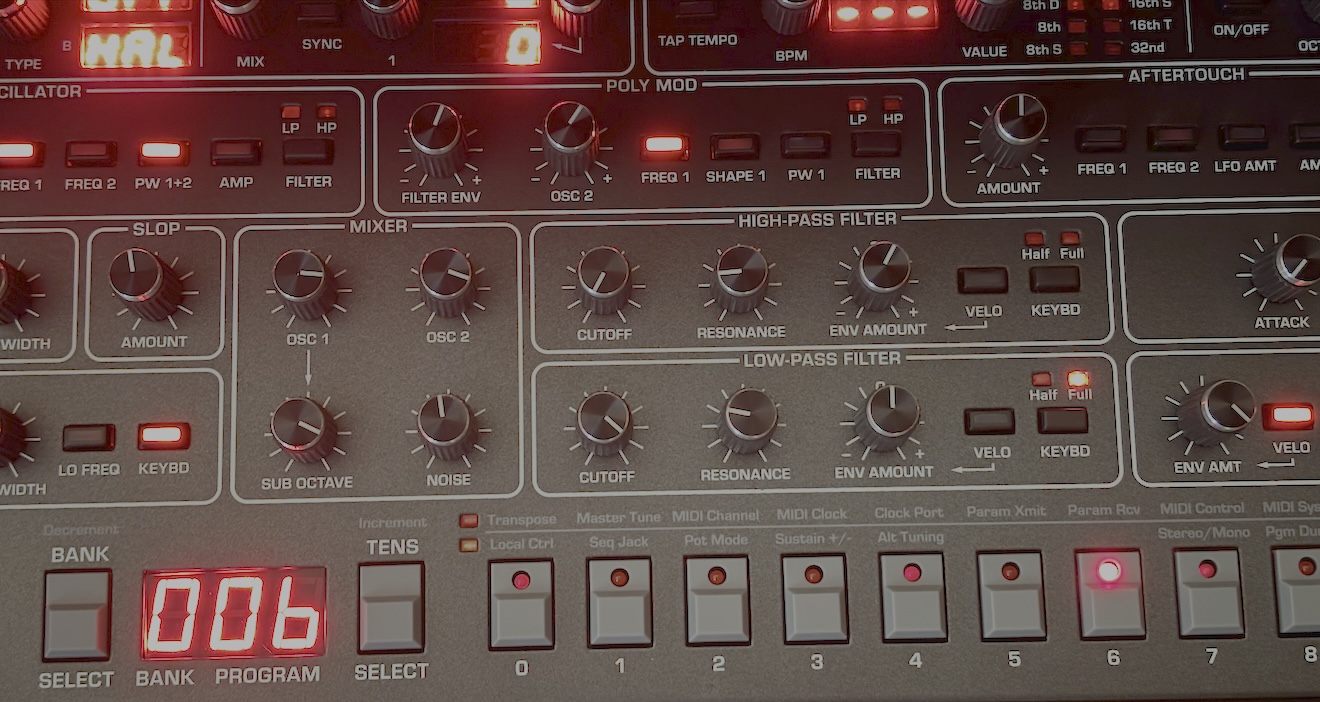
Sequential Prophet 6 (Desktop Version)
Featured Release
My second Vinyl EP is out now! Thank You My Sun has four upbeat tracks that fit somewhere between house, tech house, and minimal.
Part V: Resources, Tools & My Latest Releases
Since it’s always interesting to know what tools other electronic music producers use, here’s a list of the gear I use.
This list isn’t exhaustive.
My gear is constantly changing – things come and go. I think that’s just a natural part of the process.
If you’re thinking, “Wow, that’s a lot of stuff”, just consider how long I’ve been producing music.
Over the years, it really does add up …
To help you understand the role each hardware and software tool plays in my productions, I’ve ranked them in every category from most used (top) to least used (bottom):
Hardware: Recording
- MacBook Pro M4 (2024)
- RME Fireface UC
- Apogee Groove
- Hifiman Ananda Nano
- Golden Age Audio Premier PRE-73 DLX
- Neumann KM184
- Motu M2
- audio-technica ATH-M50x
Hardware: Synths & Grooveboxes
- Elektron Digitakt II
- Sequential Prophet 6
- Sequential OB-6
- Moog Mother-32
- Elektron Syntakt
- Roland SH-01A
- Erica Synths Bassline
- Arturia Microfreak
- Elektron Digitone
- Yamaha Reface CP
- Moog Subharmonicon
- Moog DFAM
- 1010music Lemonbox
- SOMA Pulsar-23
- SOMA Lyra-8
- Behringer RD-9
- Behringer RD-8
Hardware: FX
- OTO BIM
- OTO BOUM
- Vongon Ultrasheer
- SOMA Cosmos
- Various guitar effects pedals
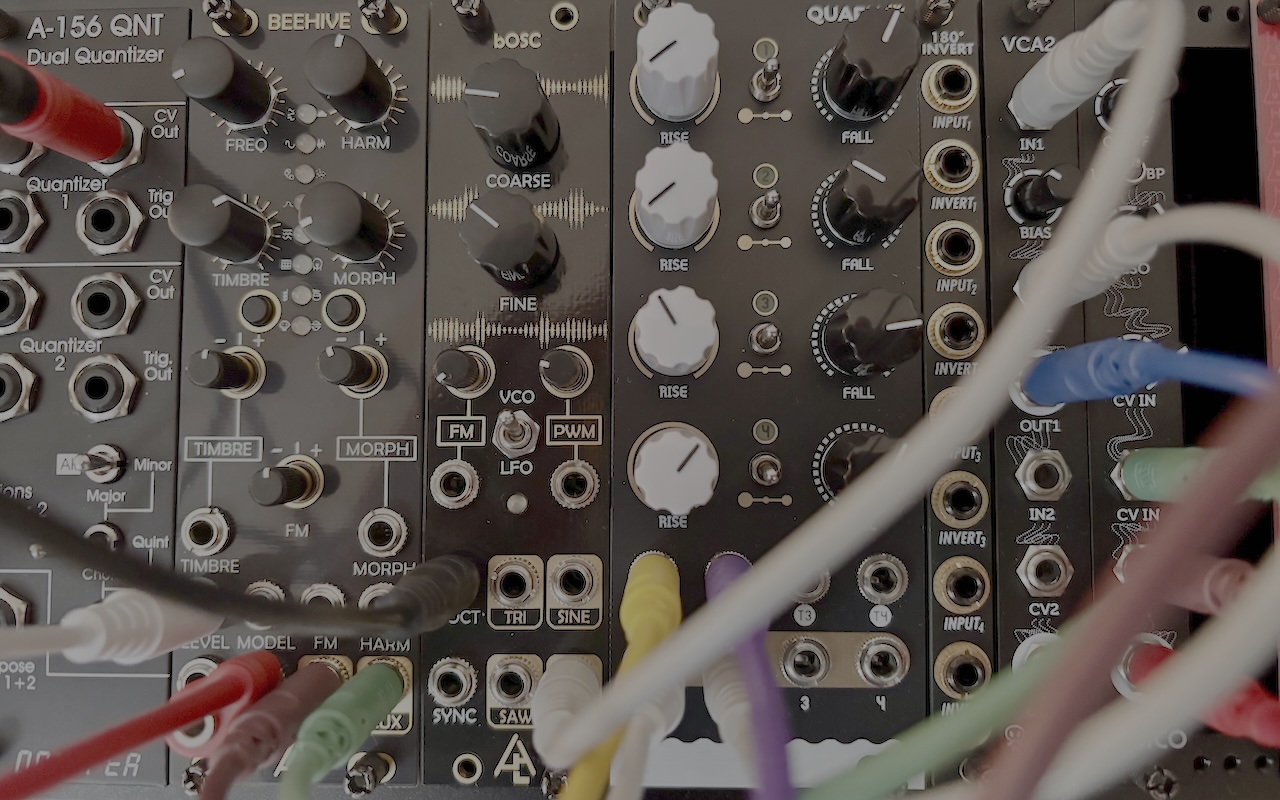
For Experimentation: My Small Modular System
DAW, Soft Synths and Sound Collections
- Ableton Live 12 Suite
- Arturia: V Collection & DX7
- Teletone Audio: Broadcast Piano, Oracle, Scarbo, Vespertone
- Felt Instruments: Bardzo, Blisko, Lekko, Nisko
- Spitfire Audio: Various Instruments
- Audio Realism ABL3x
- Native Instruments Absynth 6
VST Plugins (Effects & Mixing Tools)
- FabFilter Pro-C 3 & Pro-Q 4
- Newfangled Audio Articulate
- Oeksound Soothe 2
- Valhalla DSP: Delay, Plate, Room, SpaceModulator
- Voxengo: SPAN Plus, MSED
- Arturia Chorus DIMENSION-D
- Eventide H3000 Factory MKII
- Softube Tape
- Sonnox Oxford Inflator
DJ-Setup
- 2x Technics 1210MK7
- Ortofon Concorde DJ
- Allen&Heath Xone:96
- Sennheiser HD-25
- Genelec 8010 + Genelec 7040
- Evermix Box5
Other tools & resources
- Perla Audio: my mastering studio of choice
- iMusician: Swiss-based digital music distribution service
- Notion: digital workspace for note-taking and project management
- Hypeddit: music marketing and promotion platform
- Canva: browser-based graphic design platform
- MailerLite: digital marketing tool for email campaigns and landing pages
- Linktree: popular “link in bio” tool to house multiple links

Bochum Christuskirche
Where to find me and my music
- Magasine on Instagram
- Magasine on Bandcamp, Subvert
- Magasine on Beatport, Traxsource, Soundcloud
- Magasine on Spotify, Apple Music, YouTube Music, Deezer, Tidal
- Magasine on YouTube
- Still No Jazz on Instagram
- Still No Jazz on Bandcamp, Beatport, Traxsource
- Still No Jazz on Spotify, Apple Music, YouTube Music, Deezer, Tidal
A few last words
If you’d like to support me, the best way is to buy my music on my Bandcamp page — whether digitally or on vinyl.
Thank you so much for sticking with me this far, and best of luck with your future releases!
Take care, Magasine