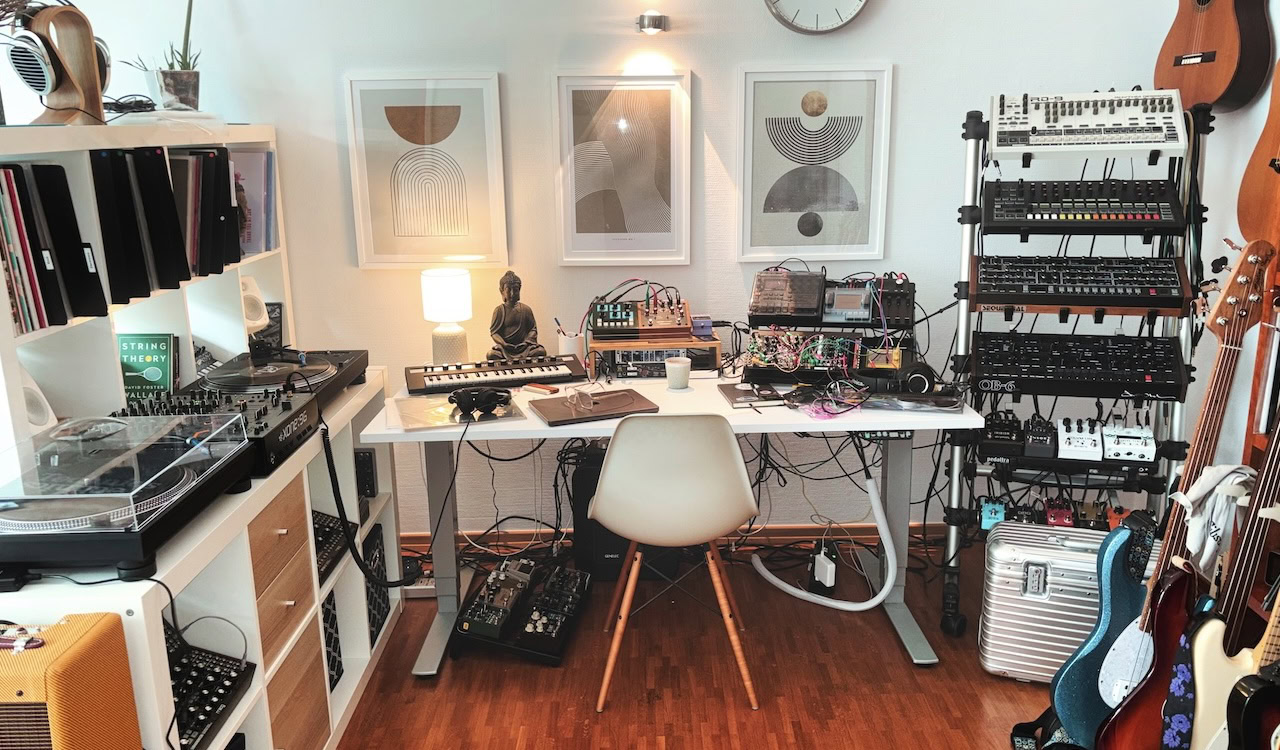
If you like my music, you might also be interested in seeing what the place where it’s created looks like.
That’s why I took a few pictures of my studio setup in mid-2026.
Note to myself: I’m curious to see what’s changed when I come back to this post later.
I’ll give a quick rundown of each photo and explain the role that the instruments and machines shown play in the music of my two monikers, Magasine and Still No Jazz.
Here we go…
Recording & Monitoring
Let´s start with some fundamentals …
Audio Interface, Pre-Amp & Outboard Effects
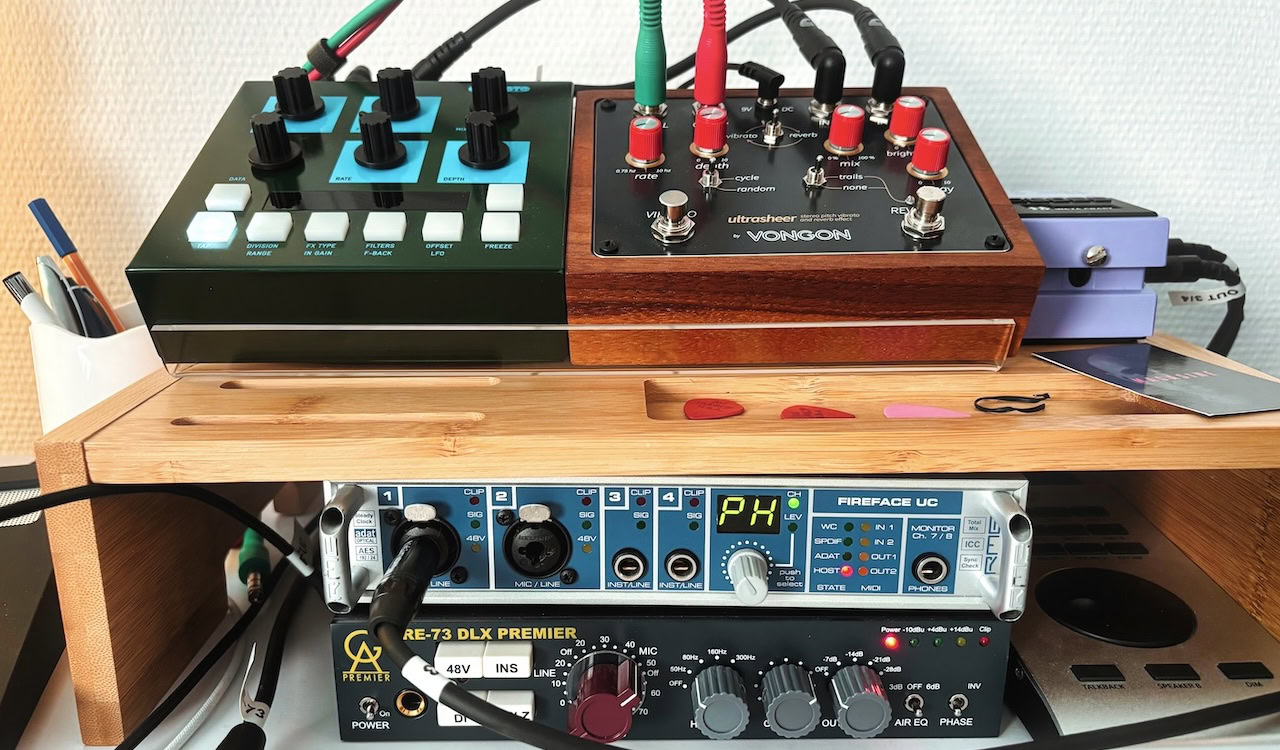
Audio Interface, Pre-Amp & FX
I use the RME Fireface UC audio interface, which has eight inputs, to record hardware synths, bass, and guitar.
Two of my main hardware synths – a Sequential Prophet 6 and an OB-6 – are plugged into the Fireface permanently (rear inputs). Every other machine is only plugged in when needed.
The Golden Age Audio PRE-73 DLX Premier Pre-Amp is perfect for recording bass (DI-Input), guitar or any acoustic instruments (mic input). The signal goes from there into the Fireface UC, which is connected via USB to a MacBook Pro M4.
My external effects chain includes a Boss Dimension D Chorus, a Vongon Ultrasheer Plate Reverb/Vibrato, and an OTO BIM Delay.
I like the sound of each unit, but I don’t use them that often these days. Plugins like Valhalla DSP are just more convenient.
Headphones
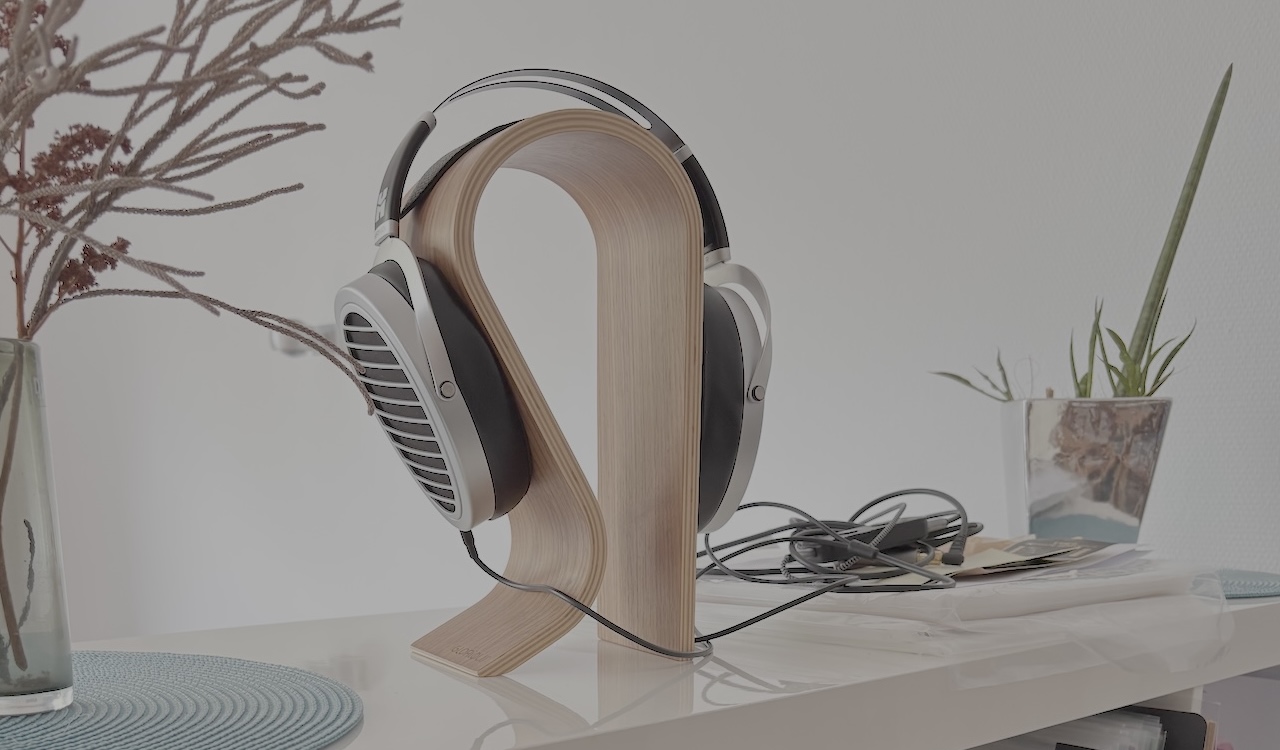
Hifiman Ananda Nano
As I said in my Producer’s Guide, I prefer to use headphones instead of monitor speakers. I find this works best for me during the whole production process.
I chose the semi-open Hifiman Ananda Nano because of their ultra tight low end.
It would require a lot of effort to get equally good results with monitors and the necessary room treatment.
Another advantage to consider:
I can work on my music whenever I want without disturbing my family.
Hardware Grooveboxes & Synths
I’ve been doing more and more of my production in the box these days, but I still have a few hardware machines and instruments that I couldn’t do without.
Drum Machines
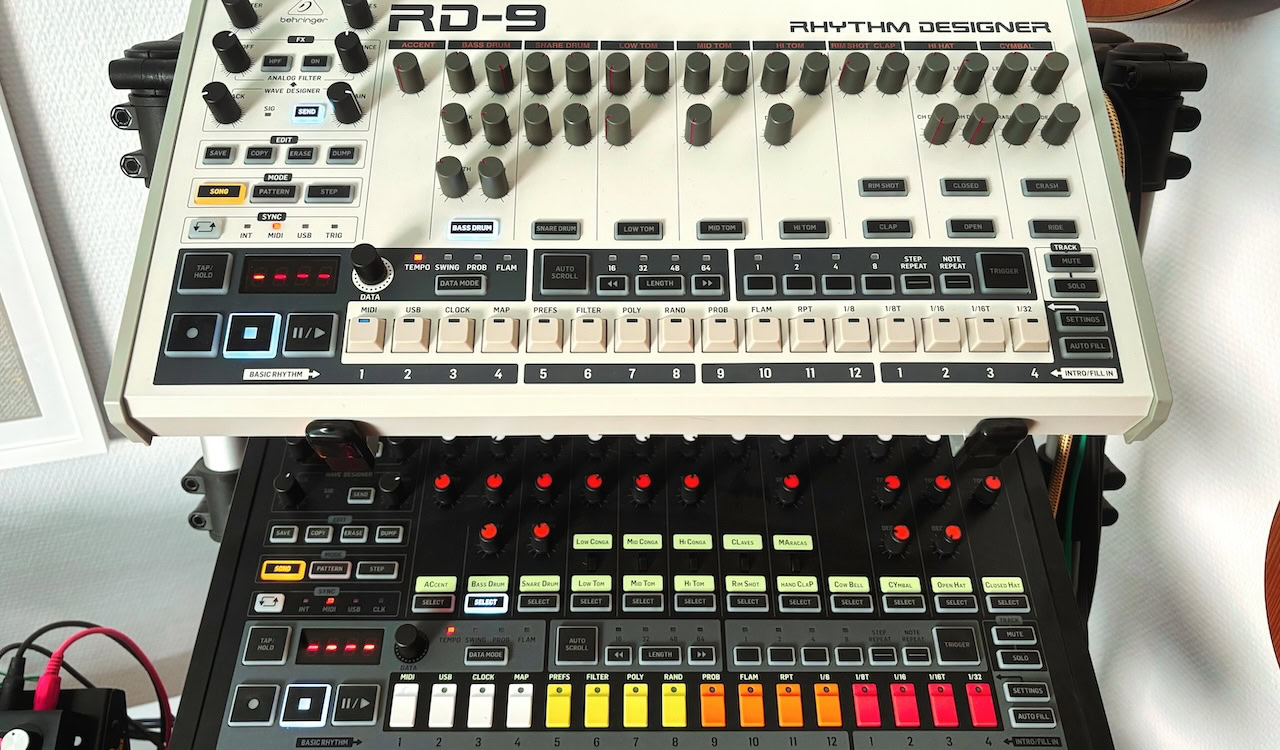
Behringer RD-8 & RD9
If you’re into electronic music production, you should at least have tried out one of the two classic Roland grooveboxes (“TR-909” and “TR-808”).
The originals from the 1980s are pretty much unaffordable now, so I went with the reasonably priced and great-sounding modern versions from Behringer.
I rarely use recorded grooves directly in my tracks though because I’m missing one crucial parameter for crafting optimal drum sounds:
Control over the attack time.
That’s why I often rebuild drum tracks I recorded with the Behringer units in an Ableton Drum Rack.
There, I can adjust the attack time for each sample individually.
Sometimes I also record entire loops, which I then cut to size in Ableton and process with EQ.
Sequential Prophet 6 & OB-6
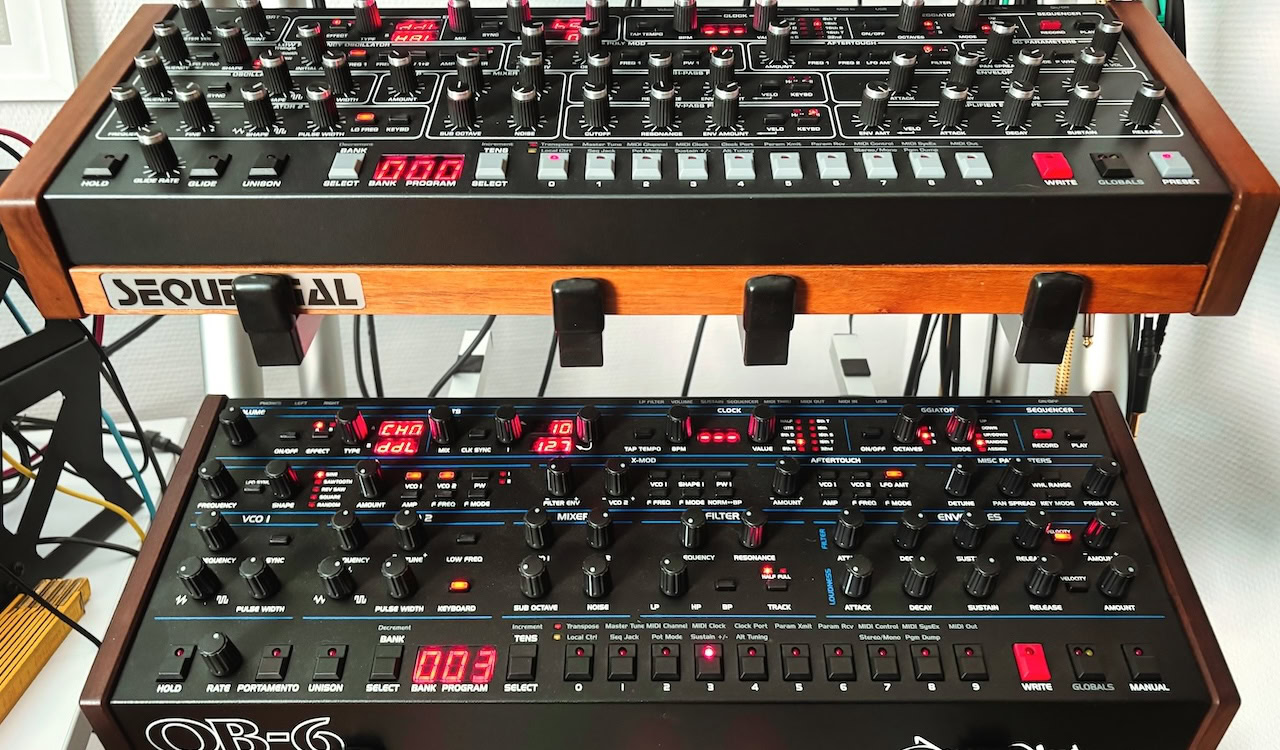
Sequential Prophet-6 & OB-6
These two instruments are my absolute favorite synths when it comes to analog sound generation.
It doesn’t take long to come up with a sound that’s just amazing. And tweaking the knobs is always fun.
Even though both synths have a similar basic sound, the Prophet-6 is simply an all-around genius that shines in many genres.
The OB-6 sounds a bit more distinctive, that is rather rougher and wilder, thanks to its SEM filter.
Moog Subharmonicon & DFAM
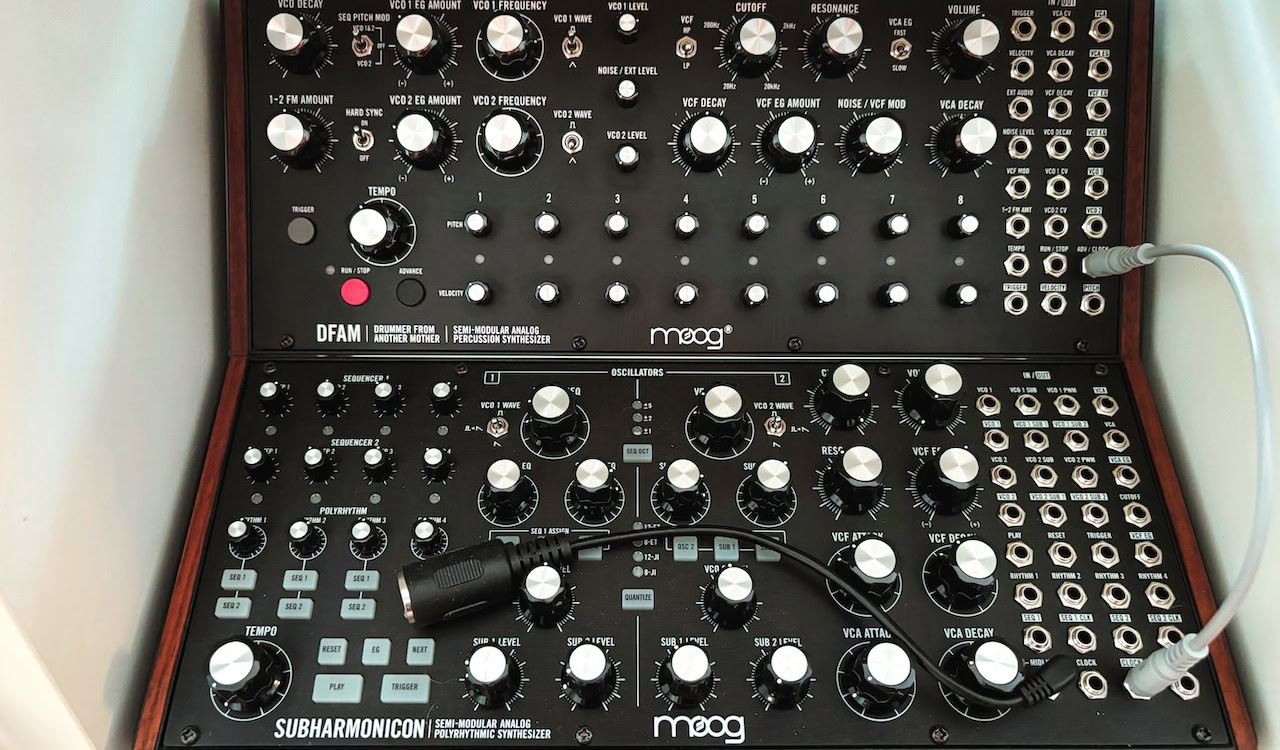
Moog Subharmonicon & DFAM
I really like the design, form factor, feel and the rich, full-bodied sound of Moog’s semi-modular synths.
However the DFAM and the Subharmonicon aren’t the best at creating sounds that’ll work well in a specific track.
Both sound generators are better suited for jamming without a specific goal in mind, waiting for happy accidents, and sampling those.
If you’re lucky, you might end up with musical motifs that can be used for new tracks.
Moog Mother-32
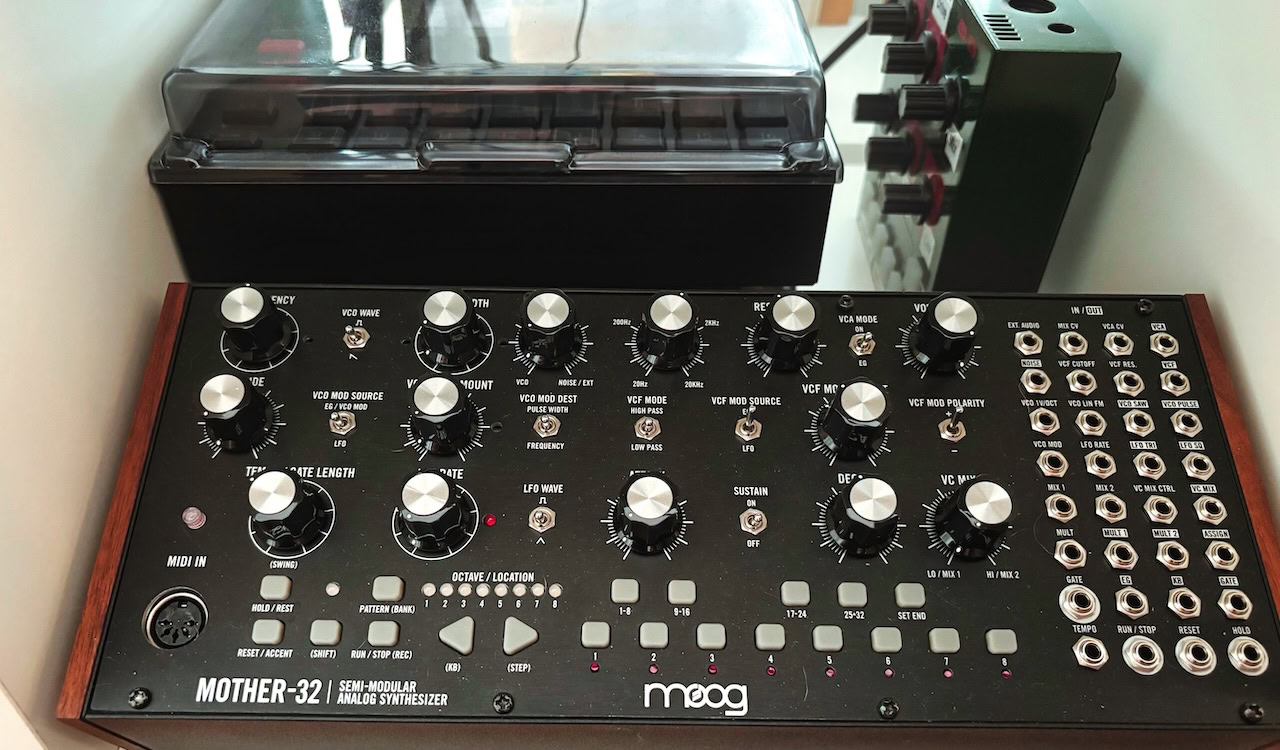
Moog Mother-32
Of Moog’s line of semi-modular synths, the Mother-32 is probably the easiest instrument to create quickly and easily great monophonic analog sounds.
I prefer to use the Mother-32 in tracks for rich-sounding saw and square basses.
So far, I haven’t really explored the modular patching capabilities on any of the three Moog synths.
That might change in the future, which brings us to the next point…
Modular System & Live-Setup (in the making)
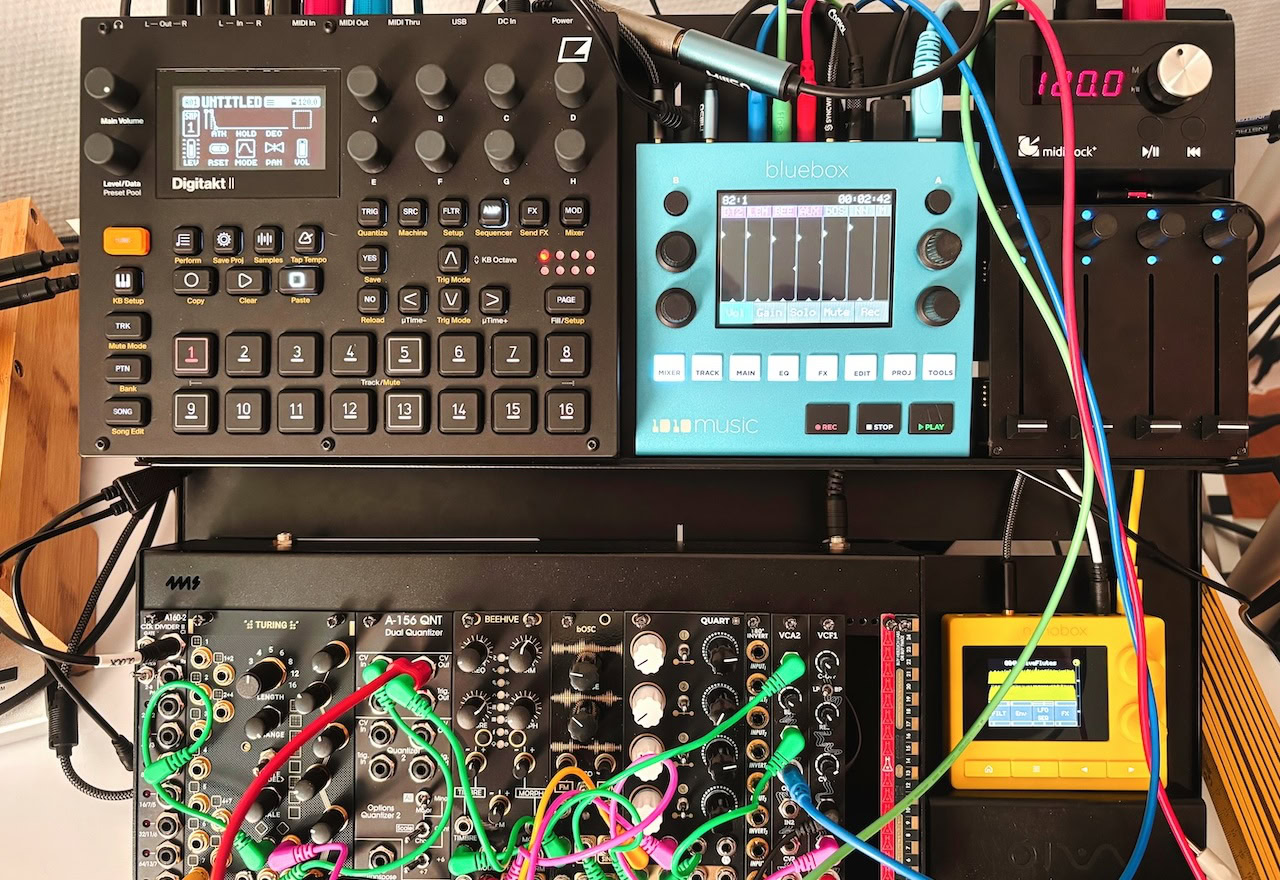
Modular System & Live-Setup
Two elements that have played virtually no role in my music so far are:
- Generative synth lines, the kind that only a modular system can produce, and
- A small, highly portable setup that allows me to make electronic music in a live setting and improvise within certain limits
For this reason, I designed a small setup, mostly using equipment I already owned.
- Elektron Digitakt II (drum sounds & loops)
- 1010music Bluebox (digital mixer)
- ERM midiclock+ (master clock)
- Intech Controller (controls Bluebox parameters)
- Modular system in a 64HP case (including TLM Turing Machine & After Later Audio Beehive)
- 1010music Lemonbox (granular synth, for polyphonic sounds, among other things)
Unfortunately, I don’t have the time right now to really dive into this setup.
But I hope I’ll be able to turn this into some inspiring project soon…
Yamaha Preface CP
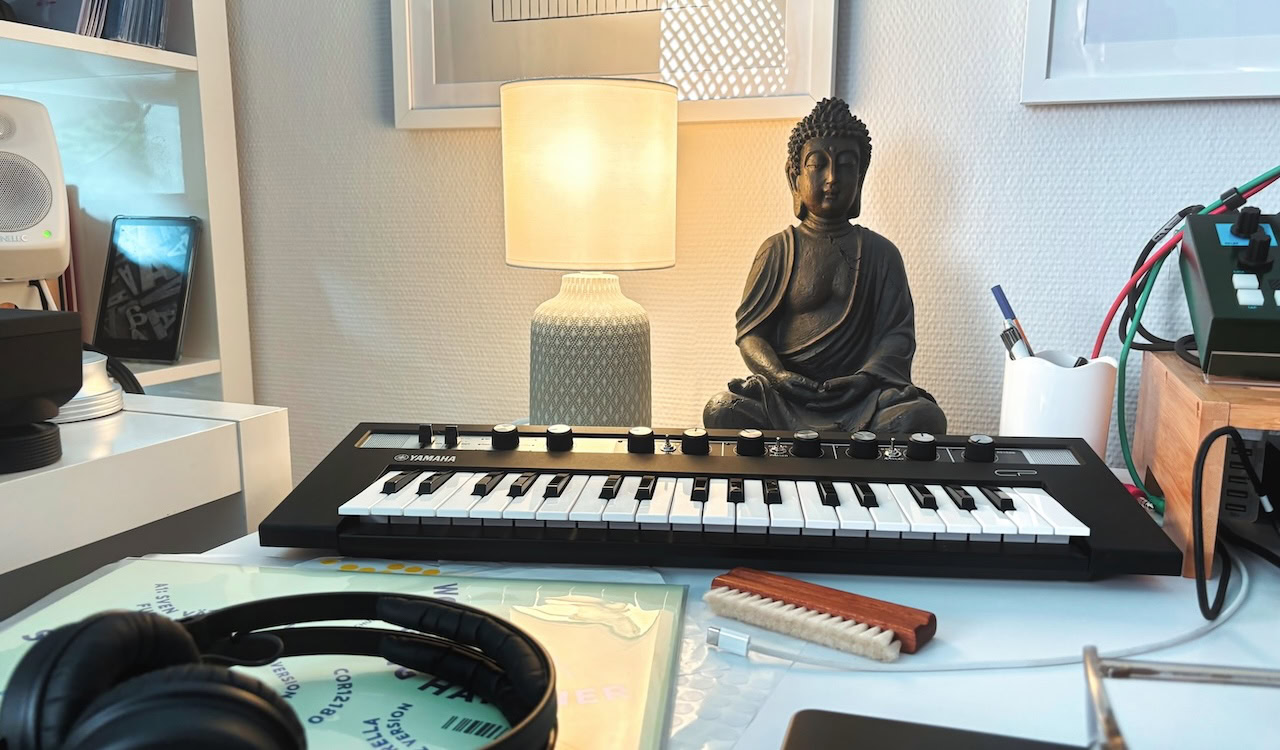
Yamaha Preface CP
The Yamaha Precface CP serves two purposes: first, it quickly delivers great Fender Rhodes and Wurlitzer sounds.
Second, it acts as a MIDI keyboard for those occasions when I want to play chords or melodies by hand.
To be fair, I have to say that I mostly generate chords and cadences in the DAW.
Either with the Chord Tool or with the “convert harmony to new MIDI track” function in Ableton, if I have a good sample to start with.
Sometimes I also use the VST plugin Scaler 3 to generate harmonies.
Ableton Live (DAW)
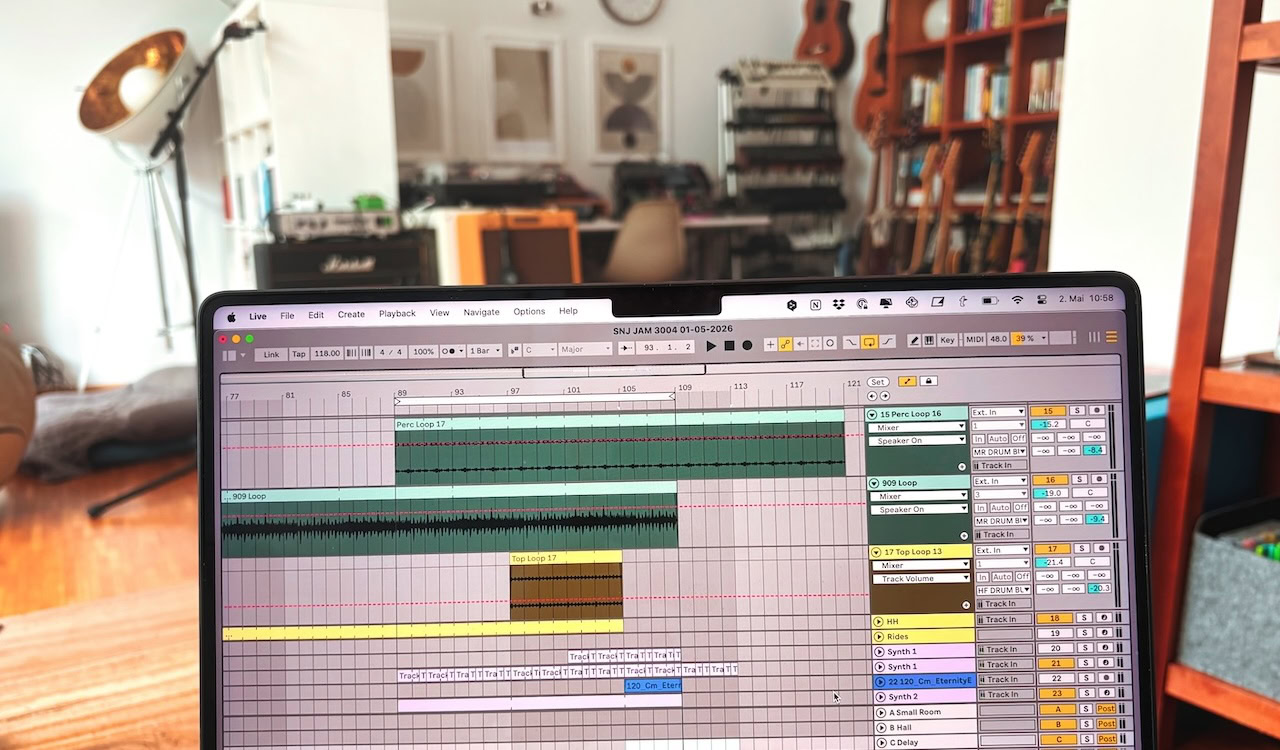
Ableton Live 12
Ableton Live 12 Suite is the foundation of my productions.
For many years, I’ve been working with a template I developed myself, which I continually refine and adapt. This template already has some selected drum samples preloaded.
Even more important to me, however, is the configuration of the sub-groups and return channels, which make it possible to quickly achieve a great-sounding mix.
Guitars, Basses & Amps
Guitars and Basses don’t play a role in my Magasine releases, but they are regularly featured in Still No Jazz productions.
Electric Guitars & Basses
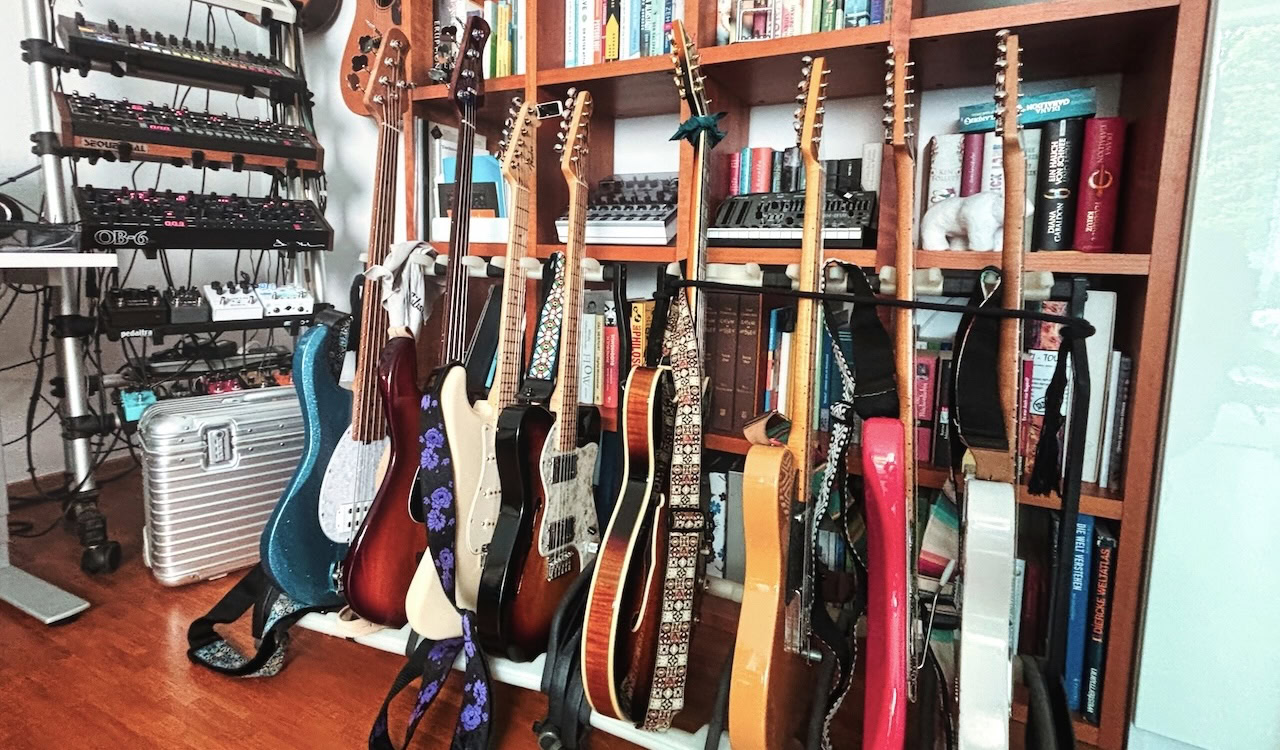
Guitars & Basses
I’ve been playing guitar for about 36 years, and I play a little bass too.
Over the years, I’ve come to realize that I’m just a “Fender guy.” I’m really into Fender Stratocasters and Fender Telecasters with different pickup configurations.
I’ve also got a semi-hollow Ibanez jazz guitar, two acoustic guitars (one with nylon and one with steel strings), and two basses (a 5-string and a fretless).
Guitars & More Synths
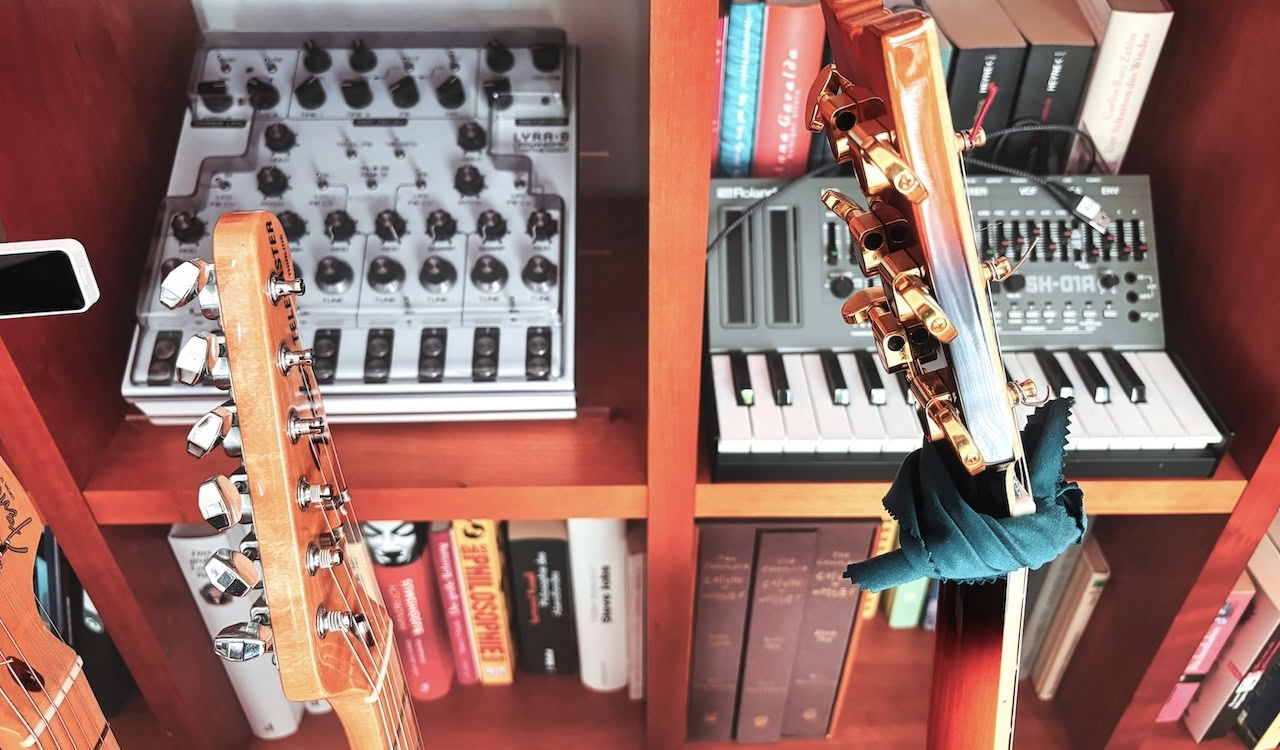
SOMA Lyra-8 & Roland SH-01A
In the background on the left is another very, very unique sound generator: the SOMA Lyra-8. It’s probably the most unconventional synth I own.
In the background on the right is the SH-01A from Roland’s Boutique series.
Marshall, Fender & Mesa Boogie
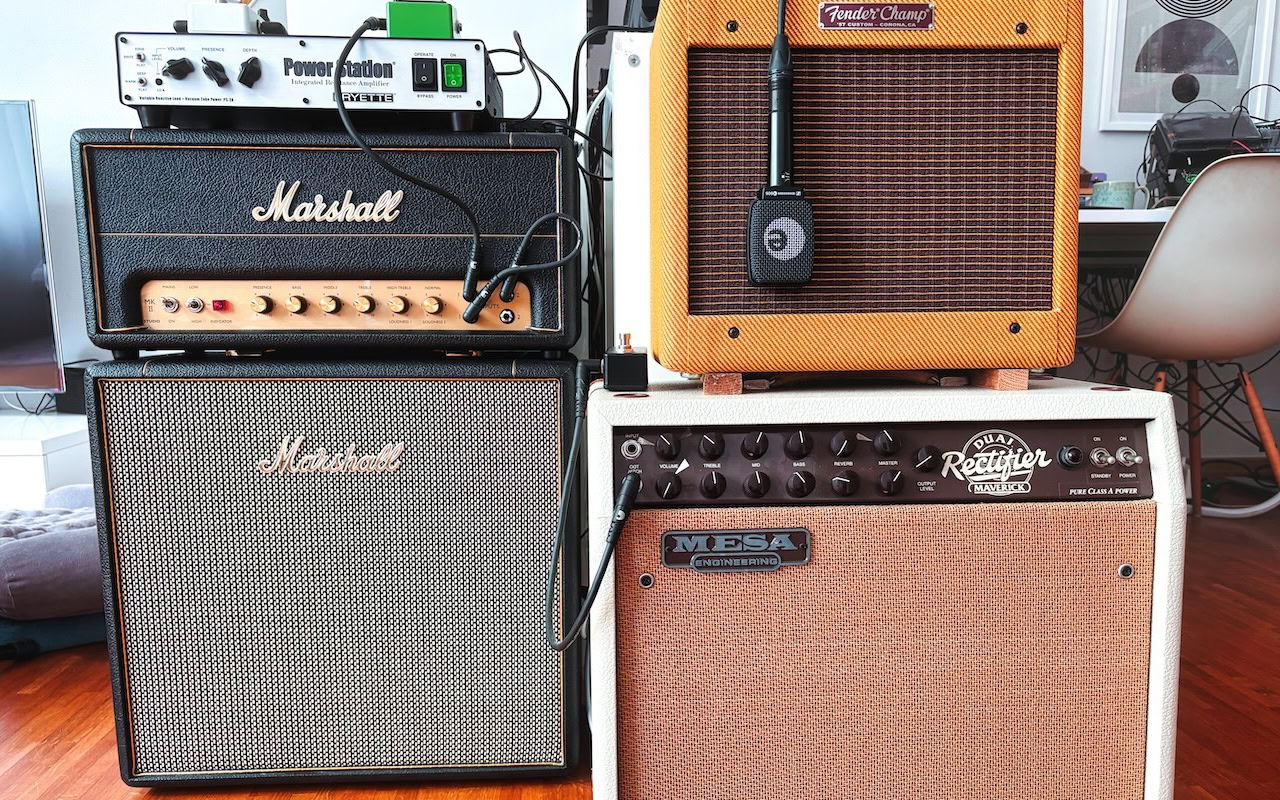
Marshall, Fender & Mesa Boogie Amps
Electric guitars need amplifiers.
I have three classics:
A reissue of the Marshall Plexi (with an Ibanez Tube Screamer in front; and brought up to room volume with a Fryette Power Station), a Fender Custom Champ, and a Mesa Boogie Maverick that I’ve been playing since the year I graduated from high school (1995).
The amps are recorded using a Sennheiser E 906 dynamic microphone, which is connected to the Golden Age Audio PRE-73 DLX Premier (see above).
Pedalboard #1
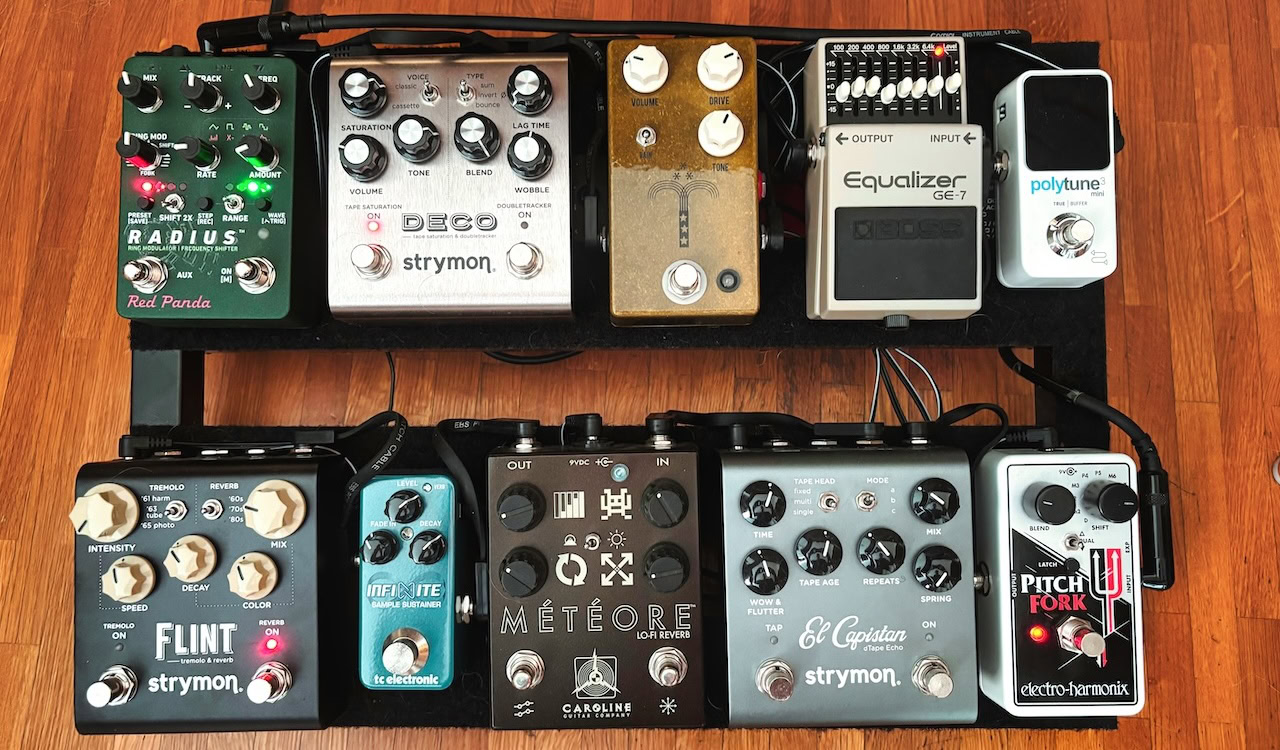
Pedalboard #1
What the modular system is to electronic music producers, the pedalboard is to guitarists: an endless playground.
Of course, the whole process involves a lot of trial and error, and I don’t know how many pedalboards of various sizes I’ve already put together and taken apart.
For a few years now, I’ve had a setup that I use primarily in front of the Fender Champ when I’m playing clean.
What all these effects pedals have in common is that they sound very transparent and barely alter the natural sound of the guitar and amp.
Pedalboard #2
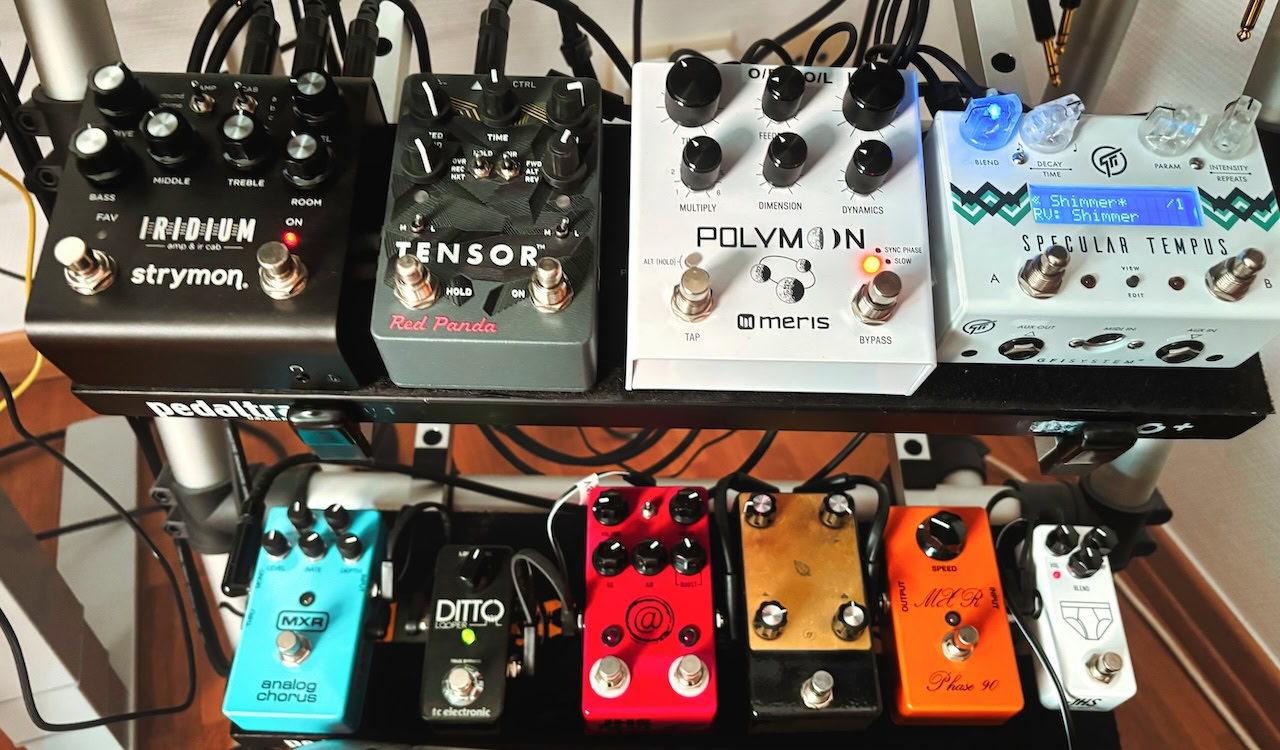
Pedalboard #2
I’ve also got a second pedalboard with some more experimental effects.
I usually use this one when I want to record directly through an amp simulator (Strymon Iridium).
Featured Release
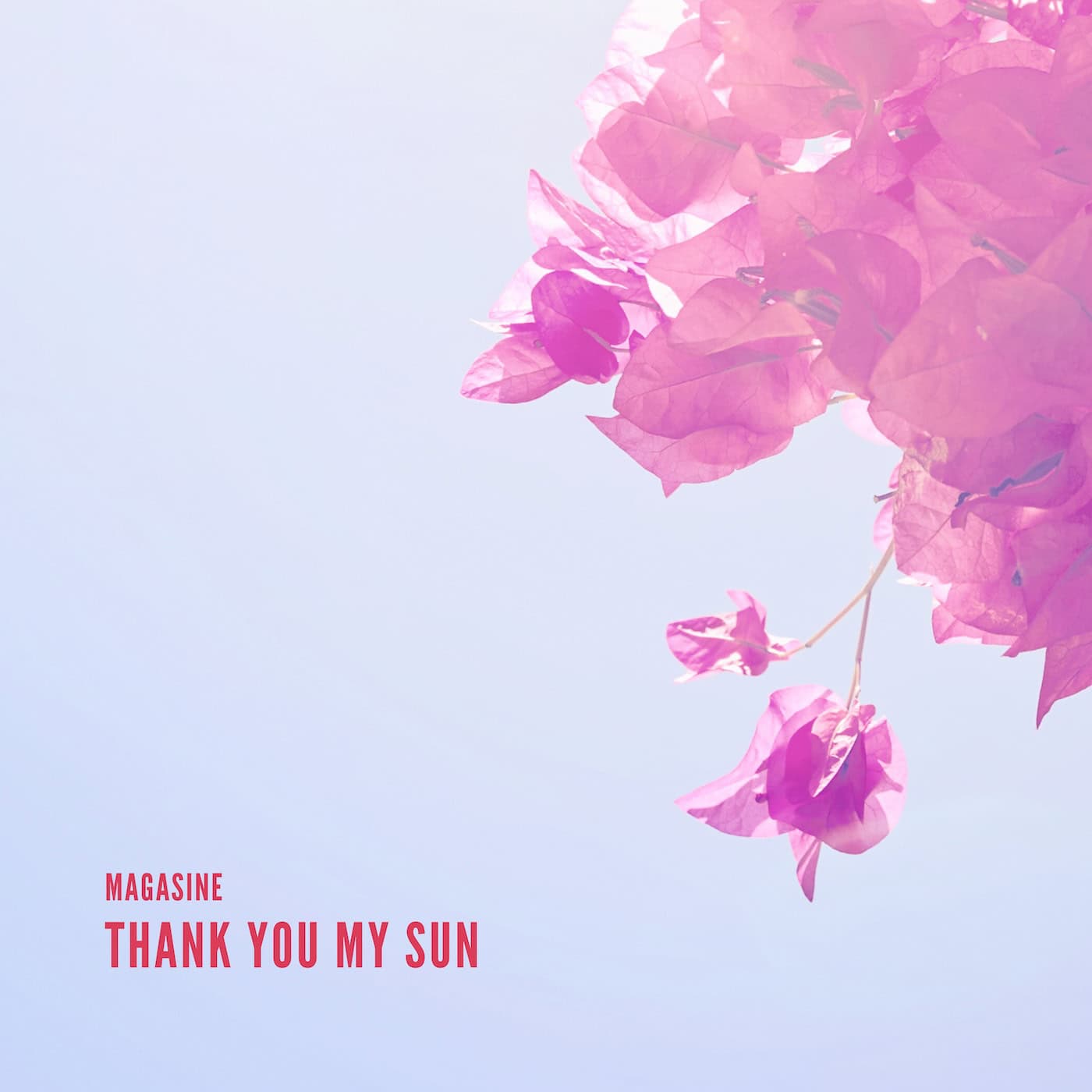
My second Vinyl EP is out now! Thank You My Sun has four upbeat tracks that fit somewhere between house, tech house, and minimal.
DJ Setup
Now a few words about my DJ setup:
Ultimately, working with CDJs and digital files just didn’t inspire me. So in mid-2025, I decided to start DJing exclusively with vinyl.
So far, I haven’t regretted the move, even though vinyl is, of course, a relatively expensive hobby.
My setup basically consists of two Technics 1210 MK7 turntables and an Allen & Heath XONE:96 mixer.
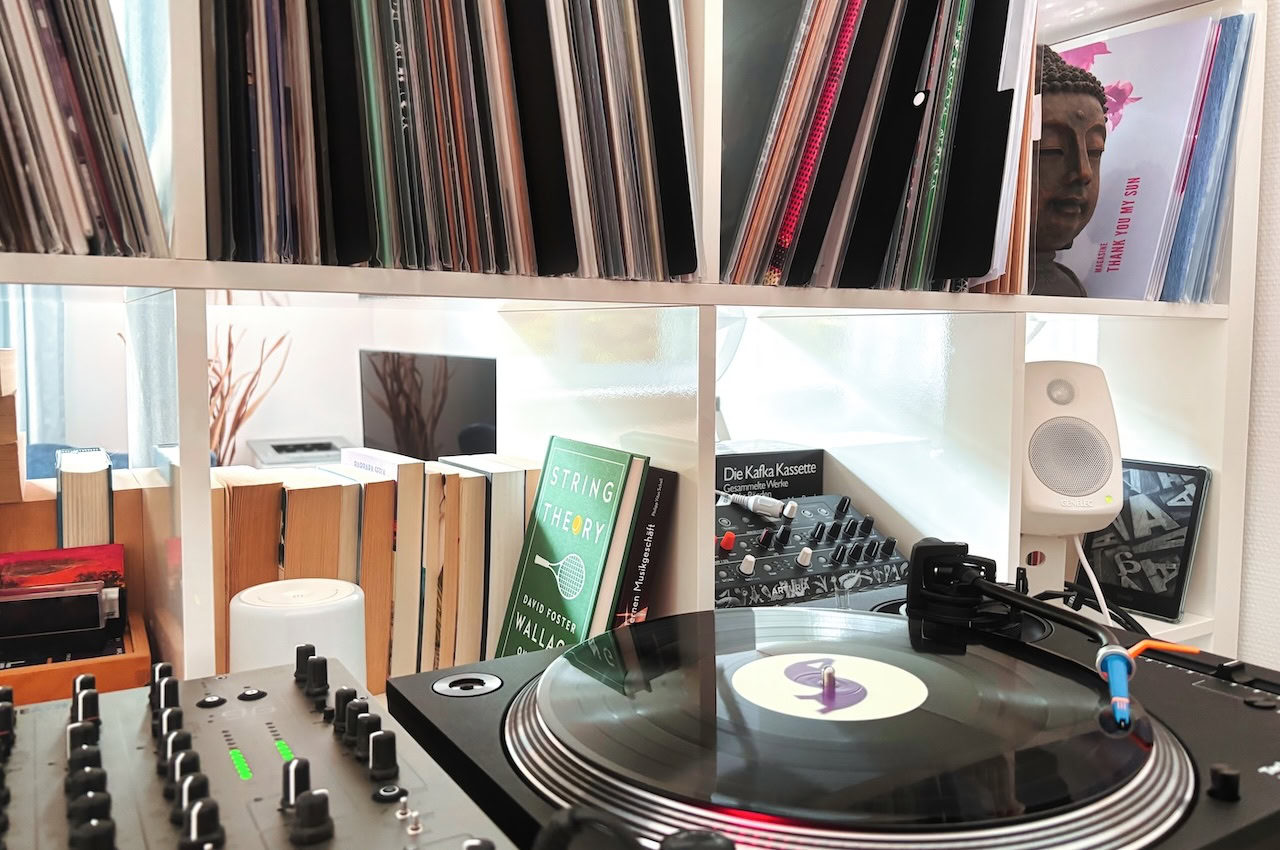
DJ Setup
Two Genelec 8010 monitors paired with a Genelec 7040 subwoofer bring my vinyl treasures to life.
For mixing, I rely on Sennheiser HD-25 headphones.
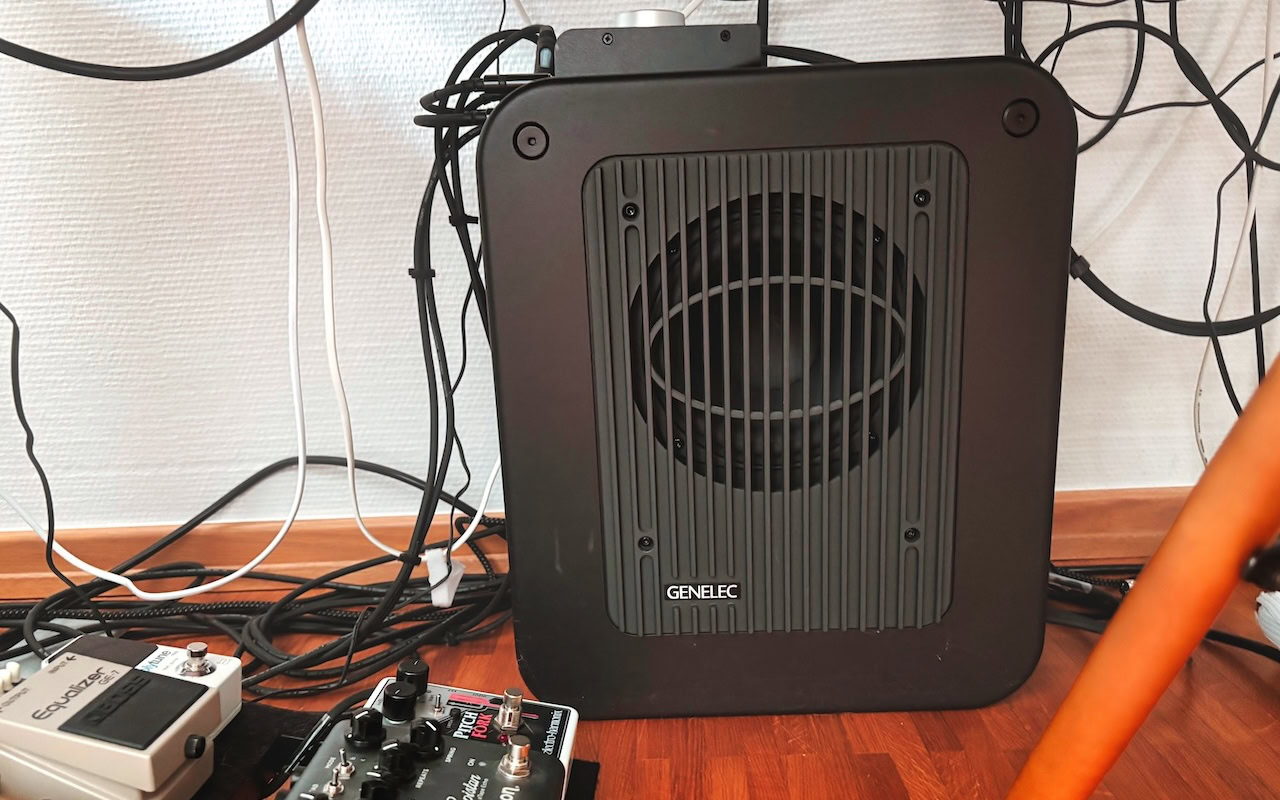
Genelec 7040 Subwoofer
Keep things in order
One last point, though not as exciting as synthesizers, guitars, or amps:
A studio with a significant amount of hardware is inevitably subject to the law of entropy.
I’ve now filled an entire cabinet with clear plastic bins where cables and accessories are stored and sorted.
This way, I can find everything relatively quickly when I need it.
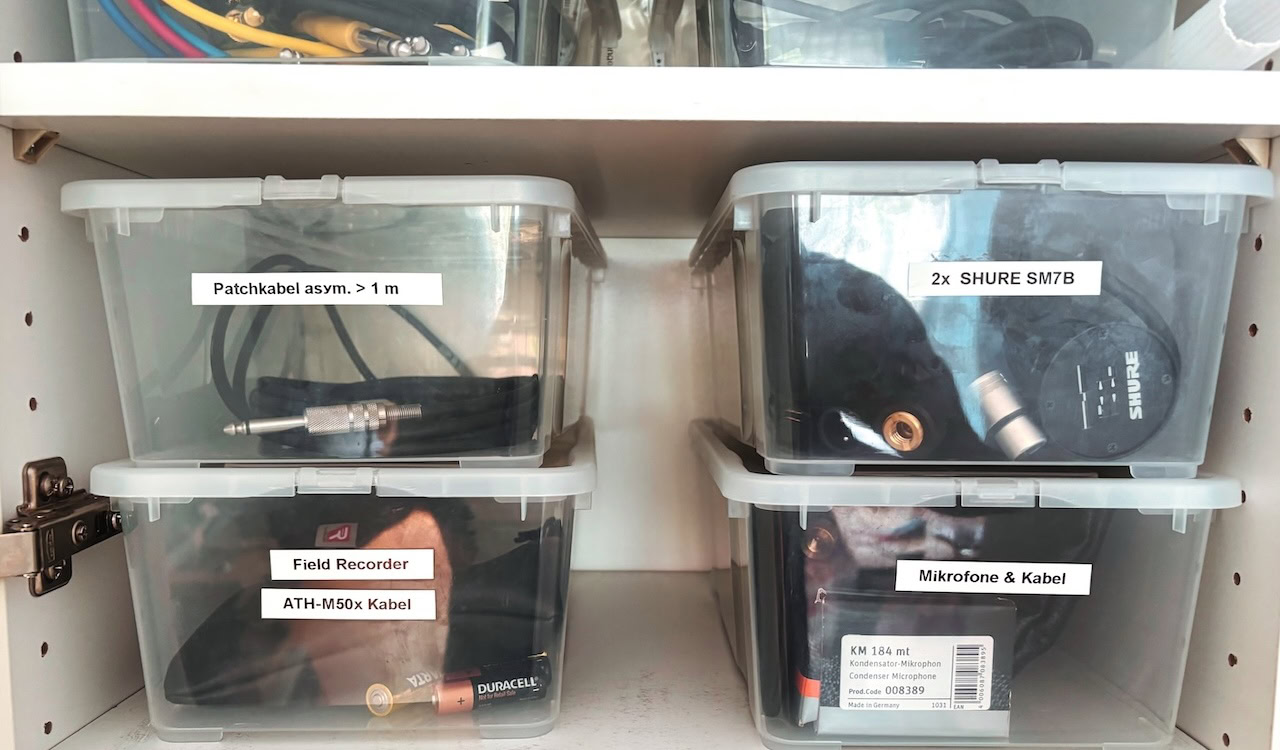
Keeping Things Organized
That was a quick tour of my home studio (as of May 2026) – I hope you enjoyed it.
And with that, let’s move on to today’s …
Listening Recommendations
Even though I’m always buying releases from producers all over the world, in this issue I’d like to feature five artists from my home country, Germany:
Sascha Dive – I Was Deep In My Last Life
Format: Vinyl only
Label: Bondage Music
Genre: Tech House
Year of Release: 2025
Favorite Track: The Rush feat. Robert Owens (B1)
What I like about this release:
Across four tracks, Sascha Dive succeeds in creating a dark, atmospheric vibe. Plus, the tracks are superbly produced and sound incredibly powerful on vinyl. I love listening to them on repeat.
Markus Homm – The Cross
Format: Vinyl only
Label: Rauform
Genre: Tech House
Year of Release: 2026
Favorite Track: Disconnect (A2)
What I like about this release:
This is yet another vinyl EP where I find it hard to pick a favorite track. With his first release on his own label, Rauform, Markus Homm delivers four great tech house tracks that I love to listen to all in a row.
Mathias Kaden – Three Decades
Format: Vinyl & digital
Label: Rekids
Genre: Tech House
Year of Release: 2026
Favorite Track: Keep Balance (A2)
What I like about this release:
A terrific album spread across two 12-inch vinyl records. Mathias Kaden is celebrating his 30th anniversary in the scene not with a retrospective of his old work, but with a collection of fantastic new tracks that offer plenty of variety while still coming together as a cohesive whole. The sound is beyond question.
Sven Väth & Wolfgang Haffner – Fusion
Format: Vinyl & digital
Label: Cocoon
Genre: Jazz House, Electronica
Year of Release: 2026
Favorite Track: L’Esperanza (Wolfgang Haffner Jazz Version) (A2)
What I like about this release:
As soon as I heard about this record, I didn’t hesitate for a second to order it. For Sven Väth’s 60th birthday, his friend, jazz drummer Wolfgang Haffner, arranged a few of his pieces in a fusion style. The result is this EP, which unfortunately features only three tracks, but they sound simply wonderful. “L’Esperanza” in particular reminds me of the sound of the fusion combo Metro, which is how I first became aware of Wolfgang Haffner in the mid-1990s.
Pornbugs & Frink – On The Other Side Of Fear
Format: Vinyl & digital
Label: Bondage Music
Genre: Tech House
Year of Release: 2025
Favorite Track: What you want (B1)
What I like about this release:
The producer pairing Pornbugs & Frink released a wonderful tech house EP in 2025, featuring the rich, warm, punchy sound typical of Bondage Music. All the tracks on it are great, though my favorites tend to be on the B-side.